Friday, August 26, 2022

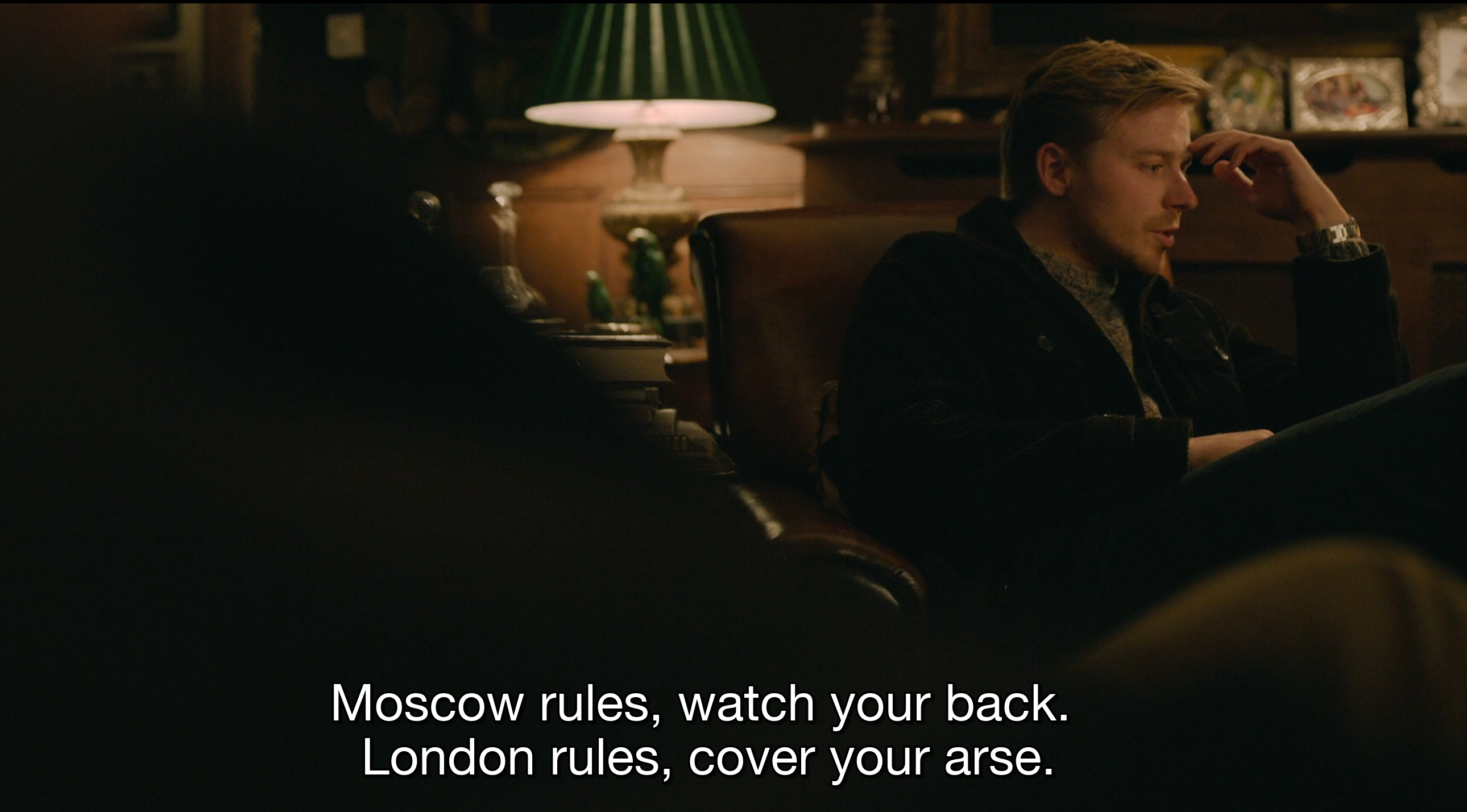
House of The Dragon (HBO) — episode one

I cannot recall in which order Shakespeare's history plays were released, but let's assume that there was an underlying sequel/prequel/reboot logic to it all. And that different quantities of money might have been splurged on different parts of different Kings. 


On various levels House of the Dragon possibly harks to a play the Bard never wrote: Young Lear. 

Anyway, the trick with the telling of history, even ersatz history, is to get us to care about every chunk of it in its own terms, regardless of what we know about what happened later. 

Few Englishmen fail to be roused by the antics of possibly our greatest ever monarch — Prince Hal/Henry V — even though we know how his project stalled with his untimely death and how his son, possibly our worst ever monarch, assumed the mantle.

This first episode of Thrones 2, derived from George R.R. Martin's novel Fire & Blood, deserves a mixed report. At the beginning it feels like watching a tribute act (with some Woke accretions) but then the joust and the ill-fated labours commence. We feel that budget turbo. 

If the makers understand, unlike their predecessors, that the tournament was a twisted microcosm of actual medieval battle c1400, then the extra monies could result in great things. It's a shame though that many of the Sers, Daemon in particular, appear to be wearing plastic armour of the sort I donned as a child. 

The Targaryen duty of dynastic whispers did come over as a little like Henry IV warning Hal of Bosworth field, or perhaps even of the schism with Rome. 

How strange that after arriving on the scene as the ultimate goody, Matt Smith has seemingly since been type-cast as a sociopath. 

Oh, how I long to binge. A friend suggested that all I need to do is wait for the season to conclude.With S4 of Westworld I found myself bingeing until I caught up and then frustratingly stuck back in the weekly cycle. 


Honor Society (2022)

The only review I read before we watched this one went something like this: a thrillingly dark and of the moment small town, high school drama which satirises the acquisition of credentials for a 'prestige' American education and then switches destination after a surprising and not-unnerving swerve at the end of the penultimate act, and ultimately doesn't quite land as intended. 


This is more or less the opposite of our own experience. In the first hour all I could do was name-check the superior titles from the canon apparently being referenced — Clueless, Election, American Pyscho — and the small screen's Fleabag too, but then the quality gap started to shrink noticeably and we found the landing both competent and even quite uplifting in its residual darkness. 

Whereas I'd been thinking that Angourice Rice was being mis or perhaps over-used in the first period — to her own detriment  — this movie ended up looking like a significant platform for greater things. (Though one recalls that the leads of the above-mentioned films were never really any better afterwards.) 

She was very good as Mare's daughter in Easttown and as V had only recently tuned into the hotness of Ryan Gosling and insisted on  full retrospective, we recently found a younger version of Rice showing considerable promise in The Nice Guys (2016).


Wednesday, August 24, 2022

Marchioness

Last Friday I read an article commemorating the 33rd anniversary of the Marchioness disaster in which a Thames pleasure boat situated between Southwark and Canon Street Railway bridges was struck from behind by the dredger Bowbelle and sank, resulting in the deaths of 51 of the 130 people on board. 


It has always seemed like one of the tentpole London disasters during the first half of my life. Others of note include the Moorgate Tube crash, the King's Cross escalator fire and Battersea Park funfair rollercoaster collapse. 

And I have always had a sense, as I do with those others, that it impacted on me as a real time, headline news item. 


Yet it cannot have done, because on August 20 1989 I was here. 

By here I mean either Guatemala, up in the Petén forest, or just over the border in the more jungly bits of Chiapas. And my access to news coverage of a parochially British nature would have been extremely limited at the time. 

So somehow I have retrofitted this calamity neatly into my own timeline. Perhaps my interest in it waxed a couple of years later when V and I moved into a home beside the Thames and these party cruisers became a regular part of our vicarious domestic nightlife. 

I now look back on my 22-year-old self and wonder at how he coped in this information-scarce environment for months on end. Being less concerned with the bla bla bla of the outside world strikes me as a kind of freedom now, yet only a couple of years later my own first connection to the interwebs undoubtedly also appeared liberating. 

Whenever within a significant settlement in Central America like a town I tended to check in. This could involve a call home on a regular schedule. 

In Antigua this was still problematic as the Guatel office — now housing Claro on the edge of the parque central — was bedlam. Around the small internal patio garden there were rows of clunky callboxes, but their use required time, effort and quite a lot of local currency. I was fortunate to have some friends in the capital who owned a fashion store in Zona 1 complete with a landline which could be more easily used for this purpose, and so I found myself making that trip almost weekly. 

I also had a friend in Antigua — a retired engineer from Aberdeen named James Stewart — who embarked on a similar journey to the UK embassy to collect a week's worth of copies of the Times, which he then devoured over breakfast at the Hotel Antigua. 

James struck me at the time as an archetypal exile who made rather infrequent trips back to the home country only to return with lurid tales of how everything had gone to the dogs there. I was convinced I would never turn out that way, and then I did. 

I can't recall if the International Herald Tribune was on sale in Antigua at that time. British newspapers were of course not even available on the one-day-late schedule I recall from my childhood summers in Spain. (It was a weird way to follow major international events like the Olympics, at least from a non-Spanish perspective, but the risk of spoilers was fairly low.) 

Two very major global moments did occur during my second period in Antigua (September-December '89) — the fall of the Berlin Wall and the Loma Prieta quake near Oakland California, both of which I became aware of in near real time: the former via the Guatemalan news coverage in the home in which I then resided on Calle Chipilapa (shared at that time with a German called Yoyo and his girlfriend, both transfixed by this development). And the latter, a few days earlier, on the TV perched on a shelf above the bar at Mistral which tended to remain tuned in to CNN all day. 


This locale of legend was situated roughly opposite Doña Luisa X. and was really the only gathering spot for foreigners in this city at the time. 

Until Al Qaeda formed, this was my earliest experience of being part of a line of the collectively dumbstruck staring at a screen. 


Monday, August 22, 2022

So long Multiverse...

Multiple universes exist in order to give us the sense that we have a sensible explanation, when in fact, we don't. 


I never thought I'd hear myself saying that, but Carlo Rovelli has successfully undermined my two decades-long 'faith' in this approach to quantum 'interference'*, and inside the pages of Helgoland I have witnessed Occam's Razor being used to splice up the Multiverse, mysteriously, into one piece. 

I'm presently immersed in the second half of this profound little book, where the author turns to entanglement, clearly neither the end result of signals travelling faster than we can currently allow, or some sort of prior agreement. Rovelli suggests, in a way I am yet to fully digest, that any correlation between two apparently distinct objects exists only in relation to a third. 

I have always loved the way that he implies more than he actually says, but once he deploys the term 'information' he becomes guilty of a sin many theoreticians in his field apparently succumb to. 

What he says is that the notorious cat is only dead or alive (in fact sleeping, as he compassionately tempers the metaphor) from its own POV. What he implies is that the properties of all matter are relative and so an isolated object not interacting with anything else (as opposed to the complex system we know all cats to be) has no reality per se. Everything perceivable is part of a web of interactions. 

I have long been fond of saying that there is no such thing as nothing, but Rovelli reveals that a thing on its own is no thing at all. 

Rovelli is a master of metaphor — not just the stand-alone clever comparison sort, but the kind which connects an idea to a useful network of concepts. Beyond his obvious cultural repleteness, it is surely this what makes him the most interesting (and useful) contemporary science writer for specialists well beyond the frontiers of his own expertise.

I suspect that I will have more to say here later about this "radical interdependence of things”. 


* Imprinted on my mind after a reading of David Deutsch's The Fabric of Reality had pushed the notion that parallel realities are a necessary consequence of our observations of the uncanny behaviour of photons. 


Saturday, August 20, 2022

Top Gun Maverick

At around the midpoint, when my mind was still reeling from all the aspects of plot and character that made no sense at all* the poignant figure of Iceman Kilmer typed "Let it go..." on his appropriately 80s home PC setup, and I did. 

In spite of all the pickable nits, perhaps even because of them, this movie is close to perfect. 


While it riffs on some of its precursor's most famous tropes, notably the cheesy dialogue and homoeroticism*, Joseph Kosinki takes things down a notch or two from his own predecessor Tony Scott's relative clumsiness in these regards. 

For the record, Maverick's jacket always had the flag of Taiwan on the back. All that has changed is that 36 years later China is in a position to throw a bigger hissy fit over it. 


I experienced the original within a raucous posse of my peers in the Cambridge Arts Cinema in 1986. I have a feeling I had already seen it at least once at the time, but couldn't swear to it; but anyway, that particular viewing was immensely more immersive. 

I now wonder if a fabulous piece of entertainment such as this would ever been green-lighted were it not for our collective nostalgia for the expansive mood of the 'prequel' and the longevity of Tom's A-listedness. There will surely always be a market for premium, escapist, silliness, but perhaps we are running out of the stars to front it up. 

Although we have a projector at home, I now regret having passed up the chance to see this flick in Campeche a couple of months ago, but it was my last night there and I was feeling listless, so I literally rain-checked.


* That Jennifer Connelly was shooting Labyrinth when Tom Cruise started training on F-14s somehow felt a bit euuuuuuuu. Yet, as with everything here, she significantly exceeded Kelly McGillis as competent woman with nice car. Yacht too. Maybe I should open a bar in San Diego. 

* Arguably the 'gayest' bits of this film occur when Tom and Rooster share a superannuated fighter for one last dogfight towards the end, and then beyond that, back on the carrier. 

Friday, August 19, 2022

Members of the club...

In the late 70s my journey home — Hammersmith bridge, No9 bus, followed by a meander through the mewses leading south from St George’s Hospital to the rear entrance of St Peters Eaton Square (later firebombed by a bellend convinced it had to be a Catholic institution), almost unfailingly delivering me to our front door within a narrow ten minute window, 17:00-17:10, verified by the church clock — in effect our kitchen clock from the other side of Hobart Place — concluded with teatime: a cup of tea in a china cup and two, or perhaps three, of these…


ç
St Peter's

St George's Hospital


No9

Update: my cousin Steph has reminded me how yum the purple version of the Club also was, with its pieces of 'fruit'. And an old friend in Aus has shared an admission, that she too liked to scrape the chocolate off with her teeth to reveal the biscuit skeleton below, something I was won to do with Maltesers too, occasionally. 


Last Summer In the City by Gianfranco Calligarich

Warm brioche at dawn is about as close as this cult novel gets to 'feel good'. And there's not a Vespa in sight. 

A croissant from San Martín an adequate surrogate here...


It offers an account of a year in the Italian capital from Leo Gazzara, a just-turned-30, would-be journalist nibbling around the crusts of more established and glamorous Roman lifestyles. 

Since its publication in 1973, it has struggled to find a lasting mass take-up beyond the literati. There are several reasons one could suggest for this, not least the fact that it ultimately reads rather like an extended suicide note. 

The novel was published at a moment of transition between Italy's 60s boom and the anni di piombo of the following decade and has tended to vanish and then reappear whenever its abrasive characters have seemed more befitting to the moment. This English translation has been released at a time when we refer to this age-group and its traits as Millennial

English readers are tempted with blurb noting comparisons to The Catcher in the Rye, Fellini's La Dolce Vita and occasionally also The Sun Also Rises

While Hemingway's avatars are lost because of the war, Houellebecq's because their parents were hippies, for or Leo and his friends, feeling this way is almost a side-effect of life in the Eternal City. 

Leo is an impecunious outsider, yet Rome has seemingly offered him an infusion of virtual blue blood; a loaned sensed of self-worth loaded with a painful malaise — a nostalgia for things one never really had, resulting in the sense of being an avanzo, a remnant, leading a life consisting of leftovers. 

He exemplifies an Italian type: the sfigato, here a person dangerously detached, drifting along the edge of an existential precipice. 

It's not hard to see why the novel has been cherished by intellectuals. Leo is a witty and perceptive observer of his environment. A little less so however of the people around him, to the extent that many readers may fail to care all that much. 

Hemingway's posse in the Basque Country are also unlikeable, but the first time I read Jake's narrative I shared his obsession with Lady Brett in a manner that was unrepeated here with Arianna. Leo informs us of her beauty, but his broader descriptions render her rather irritating.

Wednesday, August 17, 2022

Westworld S4

A few thoughts on the now-concluded fourth season of Westworld


"Clever" shows appear to have an innate tendency to become soap operas in disguise, with writers spinning out ever more absurd plot developments as an excuse for feeding the audience's fixation with the individual characters and their interactions. This is what marked the decline of Killing Eve and something similar has undoubtedly been happening here. 

There have been some big ideas in S4, but their presentation has been predominantly wooly.  I was often reminded of the words of John Ruskin: "It is far more difficult to be simple than to be complicated". 

And the trouble here has often been that Westworld is simple when it needs to be complicated (NYC, actually a small part of NYC, standing in for the entire world) and vice versa. There has long been a need for some conceptual condensation. 

I reached a similar stage in my viewing of Lost, when I realised that too many of the loose ends were loose screws and lost faith that even the writers were an omniscient presence in their own world. 

Perhaps the three follow-up seasons have suffered from a failure to fully exploit the original theme park conceit inherited from Michael Crichton. Audiences then drooped, seasons shrunk and we have ended up with characters suddenly able to traverse significant distances in the blink of an eye, a phenomenon familiar from late-stage Game of Thrones

Allowing characters from a constrained scenario to wander freely around the world is akin to the phenomenon of British sitcom characters dispatched on holidays abroad. 

Nobody is yet sure if there will be a fifth season, except perhaps Ed Harris who has claimed that filming is about to start and that it will be the last. It's hard however to see how the one that just ended could not be the last for Ed's William.  

Sunday, August 14, 2022

Slow Horses (Apple TV)

Practically everyone has been raving about Mick Herron's Slough House series since Slow Horses was first published a decade ago. 

In a recent edition of the New Statesman John Gray went to far as to suggest that Herron is a superior writer to the late John Le Carré. (Hmmm...)

Mick Jagger is reportedly such a big fan that he absolutely insisted on doing the vocals for the customised theme song. Like everything on Apple's first 6-part adaptation, it's kind of wonderful...


I read the book two or three years ago and really enjoyed it, but somehow didn't feel the immediate need to press on with these characters. Yet now I have enjoyed the show considerably more and have been trying to pinpoint precisely why. 

Actually seeing areas of London I know so well counts for something, especially when given this kind of atmospheric overlay. 


But in the end, perhaps it all comes down to Gary Oldman. There's humour in the books, but his take on Lamb is utterly hilarious and on-the-nose. A well written gag still requires delivery, and maybe I hadn't been delivering them all that well inside my head. And Oldman is the standout example of near perfect casting across the board. 

Given the way that Killing Eve became a sort of self-satire, where the writers lost all track of the bigger stakes, this is a welcome addition to the small screen genre. And Ho is surely the best pissing from inside out dweeb yet incorporated in this kind of series. And he reminds me of several colleagues from the 90s. 


I'm now into Dead Lions, applying the TV makeover in my head. We only have until November before Oldman and co return with their own delivery. 

Imaginary Balance

US media such as NBC were referring to Rushdie last night as "the controversial author" — controversial, like someone whose views are outside the mainstream...rather dodgy. 

Controversial, perhaps then to the same extent as the American "stand up" comedian who has just had his show cancelled at The Edinburgh Fringe. 

You can read the report on the BBC News website and end up none the wiser about the severity of dodginess involved. It's beyond the pale, yet the Beeb won't, for example, tell you that he flashed his dick at the audience or that he referred to Rishi Sunak as a Paki

And in between the shock factor of the intermittent stabby, shooty attacks, this is one of the main problems that free speech faces today: a self-censoring panic about causing offence, even in the business of reporting the verifiably offensive. 


Salman meanwhile, is an apostate, a committed atheist with long-standing and firm convictions. And JK Rowling is a children's author who advocates for fact over ideology. Yet both can end up in mortal danger, at the very least culturally-tagged as "controversial", because we are afraid of pissing off the organised dickheads. 

As Slavoj Žižek explains in his new book, all would-be 'free' speech is now emitted into a space patrolled by a newish species of listener...

“The basic characteristic of today’s subjectivity is the weird combination of the free subject who experiences himself as ultimately responsible for his fate and the subject who grounds the authority of his speech on his status of a victim of circumstances beyond his control... The notion of subject as a victim involves the extreme narcissistic perspective: every encounter with the Other appears as a potential threat to the subject’s precarious imaginary balance."


Friday, August 12, 2022

Prey (2022)


Even before we sat down to watch this I could hear the tap tap tap of a  zombified franchise banging its head against the window. What was this exactly — prequel, sequel, reboot..?

And during the first twenty minutes or so my misgivings were accumulating: I know how this extraterrestrial beastie looks and behaves, so spare me the piecemeal reveal lark. Why do the northern great plains indigenes emit at most a single phrase in Comanche before collapsing into modern highschooler English?* And are they really going with the whole high tech bully roughs up the Native Americans vibe? 

And then a horde — an 'orde? — of expendable, unreconstructed Frogs arrives, and from that point onwards, things start to get rather good. It's as if the production, having accepted its limitations, suddenly and rather thrillingly escapes them. 

Other iconic alien nasties have been subjected to 'updates' which haven't quite worked, or stuck (viz Daleks) but this one has been conducted with both smarts and sensitivity. 

The movie sheds its early televisual quality to become one of the better Predator outings and one that works as a standalone, and almost certainly as a career stepping stone for Amber Midthunder. 

And at the end I found myself doing something I would never have imagined myself doing during those early scenes — looking up books on the history of the Comanche Nation on Amazon. 


* There is, apparently, a Comanche-only version, which I would rather have seen. 


Saturday, August 06, 2022

No soy codo, pero...

I've been suffering somewhat from tennis elbow for the past couple of months. All the more disappointing given the fact that I haven't played tennis, proper, for years. 

V and I often turned out on our local hard courts three or four times a week during the shortish British summers. 

But then just over a decade ago she suffered a fall from a reasonable altitude, landing very hard on her shoulder, and although we did try to go back out with our racquets, it was soon clear that her service was but a shadow of its former self and the competitive element of our matches was gone for good. 

This was especially traumatic for her as she had always been extremely sporty — Guatemalan national fencing champion and so on — and had worked her way back from an ugly knee injury which occurred just before we met, but as we all now know, unresolve-able chronic conditions begin at 40. 

And La Antigua has some lovely clay courts comparable with those we enjoyed playing on over on the mucky red continent in the late 90s. 

In my youth I never seemed to get how easily athletes come a-cropper. Years and years of football, rugby, cricket, tennis, badminton, soft ball, squash, real-tennis, swimming, diving and not a niggle. (Though V and I are on the same page on the unnecessary wrist pain of volleyball.)


But then in my thirties I made a lunge on the tennis court at Cascades against an awkward Aussie opponent and landed clumsily on an outstretched leg, which left me with a form of sciatica for weeks. 

I recall that my father suffered quite alarmingly from tennis elbow for an extended period of my childhood — in his case more properly golf elbow — and had it treated with hydrocortisone injections, but that is not my way.

Luckily I have discovered a handy Argie-manufuactured med called Reversal Flex here in Guatemala, which is extremely effective at targeting this sort of discomfort. Over the counter, but ought not to be, of course. 

Albañiles in LAG tend to rave about Vitaflenaco for back pain and other forms of inflammation, and I have experimented, but this is a painkiller one should avoid if at all possible. 

In my case the garden shears can take the lion's share of the blame for my codo condition — there are times of year when I insist on manually mowing the lawn, and last June was one of those. 

About eight years ago I had some fairly serious knee ligament trouble myself, which was settled almost overnight by a dose of electronic acupuncture in Pangbourne, but I doubt similar miracles can easily be accessed here in LAG. 

In the last couple of years in London we used to play badminton regularly at the weekends with some friends near Stamford Bridge (Chelsea FC i.e. deepest Fulham) and we still occasionally indulge in the same in our garden, as it seems feasible, even for the decrepit, and always generates some amusing canine mayhem. 

Perhaps the best part of our tennis championships in Wapping were the pints at the Prospect of Whitby afterwards. The lesson here is that one's compound experiences may start to fall apart as the years go by, but one is not necessarily left with the spotty bananas at the bottom of the bowl. 


Wednesday, August 03, 2022

Not Okay (2022)

Zoey Deutch is so very good in this just-about-okay film, I ended up vicariously regretting her choice of being in it. 

We've only recently seen her in The Outfit, an obvious step up (and coincidentally, there too paired against a dickwad love interest played by Dylan O'Brien). Maybe she signed both dotted lines around the same time? 


The trouble is that she makes a character set up to be unlikeable, vaguely likeable. Writer-director Quinn Shepherd has tried to offset this problem by introducing a woke paragon in the form of school shooting victim Rowan, but this then breaks what I see as the golden rule of satire — nobody in the story can be excused from ridicule. 

The screenplay makes some questionable choices in terms of believability and good taste. It ought to have danced in step with the zeitgeist, yet often felt clumsily off beat. 

The more revealing dramas about social media tend to be projections — e.g. Black Mirror — rather than attempts to whack the highly mobile mole in the moment. 

The characters that share the office with Danni at 'Depravity' are perhaps the movie's biggest fail, especially a young man with South-Asian roots and a couple of unnecessarily nasty LGBT roles. 

Wednesday, July 27, 2022

All dressed up and nowhere to go...

In a surrender—nobody’s sure why—the loser is always more elegant than the victor, to obtain better conditions, maybe, or maybe when you have nothing left you realize that appearances are at least something > Gianfranco Calligarich, Last Summer In the City

This phenomenon was possibly never more apparent than at the end of the American Civil War. That even an Italian should be aware of the overdressing tendencies of losers is possibly significant. I've noticed something similar amongst the obviously guilty at the Juzgado in La Antigua lately. 

This brings me on to a parallel topic. A Quora query-poster recently asked what things to look for that immediately identify us as British tourists? I shared this with my Brazilian friend TC and she had her own substantial, well-observed list, which nevertheless concluded "mostly the Panama hat (the female version being the ill-fitting, oversized, flowers-print summer dress paired with havaianas)."

The funny thing is that these sartorial items are no longer quite the British, middle-class peculiarities they once were. I tend to blame Instagram. Millennials on tour the world over no longer seem to dress for the climate or topography, but for the photo. 

Those ludicrous summer dresses or long, heavy skirts, even the Panama, have become considerably more universal. In the sweltering heat of Cartagena last March I was a little bemused by some of the outfits sported by couples that were either Cololmbian or regional in origin. 

Social media has been engendering far narrower idioms and contexts across our culture and fashion is not immune to this condensation.  


Wednesday, July 20, 2022

Sherwood (BBC)

I really enjoyed this series. Though if truth be told, my enjoyment probably peaked someway between the middle of the third of six episodes and the same part of the next one.


The best British detective shows tend to have a great sense of place and an earnest kind of soapiness, but this was almost next level, aiming at a sort of national therapy session and catharsis. 

The plotting at first seemed intricate and then perhaps a little messy, but now that a second season has been commissioned some of this unresolved stuff can perhaps be threaded into the new pattern. 

I was left wanting to know a bit more about what had pissed off Andy so much, so suddenly.  Though this reaction was apparently a reworking of the seemingly motiveless (or motive undiscoverable) 2004 murder of Chanel Taylor by her father Terry Rodgers, who had walked her down the aisle just seven week earlier. 

Terry found himself hiding in Sherwood Forest alongside former UDM miner Robert Boyer, guilty of killing and chopping up former NUM miner Keith "Froggy" Frogson with a sword. 

Investigators initially believed the crime had something to do with the two men having taken opposing positions during the miners' strike twenty years earlier, but it turned out to be a bit more random. 


Writer James Graham, decided to add the missing layer of meaning to these events in the neighbourhood of his own youth, serving us up with something more engaging than a mere procedural. 

He has taken this story of the country's largest manhunt and added some ready-to-hand evocations of the Robin Hood myth, a hidden state-level conspiracy and a proper squall of emotionally-resonant dramatic tensions via a plethora of well-drawn characters — plus the real and perceived connections between them, both now and during the death throws of the local mining industry. 


One's enjoyment will tend to peak as this slightly improbable concoction comes to the boil. As I mentioned at the start, around an episode and a half from the end. 

The atmosphere is superb throughout though, and the characters feel real — due in no small part from the excellent performances — yet many of the situations they are placed in feel contrived. (The stand out amongst these being Lindsay Duncan's expositional cameo at Lord Byron's ancestral pad.) 

I'm certain that Brits over 45 will get more out of this than almost any other audience members. Like Live Aid the following year, the unburied hatchets here are one of the key landmarks in our lived historical experience. 

I picked up on a remark made right at the end, that Nottinghamshire is a kind of county in limbo, neither southern nor properly of the north. It made me reflect on how the English tend to comprehend their own geography, social and physical, and it occurs to me that while we are liable to absorb our impressions of rural England through literature, it is football that places the pins on the urban map. 

In the lead up to 1984, when the miners were on strike (or indeed weren't), Nottingham possessed not only one of the more successful teams in the country, but also in Europe, yet ever since the fate of this club has reflected the relatively forgotten status of the city and its environs. So alongside this tale of hesitant coincidences we can slot the fact of the re-arrival this very year of "Notts Forest" in the Premier League.*

I won't discuss the aforementioned state-level conspiracy too much as this would involve spoilers, except to say that spy cops were real, though I was previously only aware of their insertion into more marginal insurgent communities like animal rights activists and Greenpeace-style eco-warriors. 

I found Lindsay Duncan's analysis of the underlying role of Thatcher's government in all this was rather childishly condensed — made to sound serious because it came out of the mouth of a posh lawyer rather than a chippy old union comrade. 


* Graham took some serious flak for this usage, out of the mouth of old-timer Gary no less. 


Tuesday, July 19, 2022

Heat Apocalypse

 This is possibly how London sees itself right now...


(James Francis Danby, The Houses of Parliament from the River, 1864)


There is a persistent note of hysteria in the collective British response to rising temperatures these days. When it is excessively cold, anyone who moans is reminded not to confuse weather with climate. This is unlikely to happen in summertime ever again. 

The news item on SKY which most struck me today was the closure of a recreational boating service on the Thames, owing to 'dangerous' levels of heat. 

Yet these same people too afraid to frolick on the water will happily fly over here and frolick away down at sea level where 38 degrees is about average for many months of the year. 

And the airport runways don't melt. 

It's hard not to conclude that we Brits fear climate change as somehow particularly threatening to our national character — as if a few more degrees of heat will turn us into Italians, Spaniards or, God forbid, Greeks. Ater all, we have some quite ingrained prejudices about people who live in hot countries. 

The Spanish of course are no lazier than us, and have evolved a pattern of life that suits their summer climate. It may well suit us to do the same. It could be done more easily and quickly than reaching Net zero, but it seems we will still prefer to moan about the changing climate rather than adapt to it in any practical manner.

Previous generations tended to respond to collective crises with individual solutions (buy an ice lolly, jump in the fountain etc.). But millennials appear far more likely to relentlessly convert collective difficulties into cosmic calamities. "Phew, what a scorcha!" has become "Behold, the heat apocalypse". 

The pandemic hasn't helped. We might as well rename the House of Commons the House of Cobra.

That said, the tendency for the entire country to fall apart every time some unusual conditions emerge is hardly something which has developed overnight. 


Monday, July 18, 2022

The Memory Police by Yoko Ogawa

During his retirement years, which would amass to 24, my father embarked on a process of subtraction of stuff, activities, people etc. This was initially unsettling for me, but later on, as I moved deeper into middle age, I began to appreciate how our interactions with depletion tend to become ever more mindful, as the promise of progress that we moderns all tend to grow up with is debased by those progressively gusty draughts of decay. 

And then there have been these past few years when, even without the deep personal losses — I have been prompted to contemplate just how much of the world it is possible to live without. I offer these reflections as an introduction to Yoko Ogawa's extraordinary early fable, about an island where things — along with their emotional associations — are steadily vanishing, and the subsequent requirement to fully delete them from memory is being ruthlessly enforced by the authoritarian body of the title.

There is a disconcerting ambiguity to the phenomenon. Nature is at least partially complicit (birds just fly away), yet so too are the population when they burn all their own novels. Early in the story there are some stunning set piece open air vanishings, but later on the author shifts the perspective to circumstances that are more cramped and personal, with an emphasis on the withering of whatever it is that each of us possesses as an essence. 

Disappearances are at first sudden, then start arriving in the wake of disquieting premonitions. 


Magical Realism — rather like Woke — is a term that can be deployed in both a complimentary and a derogatory fashion, and for broadly the same reasons: its practitioners can go about their business in an authentic manner with both flair and intellectual rigour or the espousal of the position can in itself signal a descent into phoniness and flummery. 

Japanese literature generally takes the right path at this intersection, and I suspect that this is because the Japanese themselves have certain fairly stringent notions about the ways in which the everyday and the fantastical must interact. 

Ogawa's speculative island regime with its conspiracy of both conscious and semi-conscious deletion of concrete things and their meanings served up a significant memory of my own — of a standout example of the cinematic expression of Magical Realism from Argentina: Eliseo Subiela's Últimas Imágenes del Naufragio (1989), in which we encounter a reclusive character named Claudio, dedicated to removing a single word from his personal lexicon with each dawning day. 

Claudio was played by the late Hugo Soto who had previously been paired up with the more recently late Lorenzo Quinteros in the same director's Hombre Mirando Al Sudeste, a concept which was shamelessly ripped off by Hollywood without the merest credit as K-Pax, surely now even more forgettable, as Soto's role was re-enacted by Kevin Spacey. 

Former resident of La Antigua Gore Vidal suggested that Magical Realism is something we have 'done', like a place one turns up once and gets the t-shirt, while Vikas Swarup has made it known how he has no time for an unrealistic realism where birds talk. 

In this novel the birds talk with their feet, and depart, no small problem for the narrator's father, an ornithologist. 

I suppose writing fantastical literature is a bit like preparing a soufflé — do it well, or not at all, and back in '94 Ogawa did it rather well. I can also recommend her dark, interlinked story collection, Revenge.


Where will the deficit fall, this time?

In the first televised Tory leadership debate Kemi Badenoch noted — admirably, and yet for such a junior minister, a little patronisingly — that all decisions made by government involve trade offs, such that every gain is achieved at the cost of a deficit somewhere else.

Something similar occurs of course with the decisions made by those tasked with choosing the representatives by whom they wish to be governed. 

The context in which Badenoch brought this to our attention is illuminating, for every member of the audience — and perhaps more importantly the actual electorate of Tory MPs and then members — will have been pondering how to settle on another pair of proportions, that between the aspirations and the capabilities of each of the candidates. 

Some sound better than the others, some seem more capable. This same electorate erred rather drastically on the side of hot air last time and may be liable to compromise somewhere closer to the other end of the spectrum now.

Friday, July 08, 2022

Peaks and Troughs

My reading of this new research is that we are doomed to a pattern of recurring covid waves because our current preventative behaviours — strict during the peaks and then lax during the troughs — is in effect part of the impetus behind the pattern.

This might seem counter-intuitive, but we have to be at our most vigilant and regulation-heavy when the pandemic appears to be idling.

The pandemic is definitely no longer idling here in Guatemala as the BA.5 variant breezes through a population that had only recently relaxed its guard. 

There seems to be no clear consensus as to how pathogenic these new sepas are likely to be. They are clearly no respecters of vaccination or even fairly recent infection with earlier versions of Omicron. Vaccination levels in Guatemala are lower than in the developed world, so any sort of compound immunity in the population will be less pronounced. 

There was a fairly recent research report suggested that Omicron does not in fact produce less severe disease than Alpha or Delta, it only appears to do so because of the growing prevalence of antibodies, but even in countries like the US and the UK, take-up of jab number 4 has been lowish, leading to a possible waning of overall protection. 

My own (anecdotal) experience is that these latest airborne nasties are liable to cause really quite serious disease in individuals that have been triple or quadruple-vaxed, even those with recent prior brushes with Omicron, yet are less likely to result in fatal outcomes. 

Before we celebrate, the symptoms brought by each new variant appear to be worsening again. Around one in ten people are likely to end up with chronic issues lasting a long time, both physical and cognitive. 

The gap between infections is narrowing and it is now being reported that those that are infected on multiple occasions are more likely to experience longer-term health issues. 

Covid can damage the lungs, heart, brain, liver and kidneys and any infection is said to increase the risk of heart attack (by 72%), stroke (by 52%) and diabetes (by 40%). 

Let's face it, Guatemala is a nation relatively resigned to cases of premature death. Yet what must be most troubling the authorities here now is the prospect of debilitated thousands in the workforce requiring long-term treatment and/or management of complaints which could then feature as co-morbidities in any future waves.

And this in a country where underlying chronic conditions like hypertension is already poorly managed.

Even though the collective will almost everywhere for lockdowns and curfews appears to have evaporated, some sort of severe economic impact, nationally and globally is almost unavoidable.

Developed world governments may have over-responded in 2020 to the initial economic challenges and are now comparatively indebted and moving in the opposite direction to fiscal easing. The assumption that inflation was largely a temporary glitch generated by a surge in "post-pandemic" demand has ceded to the realisation that supply-side disruptions could be around for far longer than anticipated, potentially leading to stagflation. 

"Team zero covid", China in particular, seem set for a very difficult twelve months or so and that will exacerbate existing supply chain snafus.

The war in Ukraine shows little sign of abating any time soon.

With our defences now appearing redundant and BA.2.75 aka 'Centaurus' on its way, we can expect covid to render many workspaces temporarily inert, with governments regulating in a patchier fashion to control the numbers gathering in indoor environments. 

Arch pessimist Nouriel Roubini believes central banks will "wimp out' of their determination to control inflation with rate rises as evidence of a slowdown emerges, adding that...

The next crisis will not be like its predecessors. In the 1970s, we had stagflation but no massive debt crises, because debt levels were low. After 2008, we had a debt crisis followed by low inflation or deflation, because the credit crunch had generated a negative demand shock.

Today, we face supply shocks in a context of much higher debt levels, implying that we are heading for a combination of 1970s-style stagflation and 2008-style debt crises—that is, a stagflationary debt crisis
.


Monday, July 04, 2022

Men (2022)

Fans of horror and thriller genres will be familiar with the split narrative problem: movies with two distinct parts separated by a clear reveal. "What's going on?" driving the entertainment value for the first period, followed by an all-too-frequent "Oh, so that was it" in the run up to the end credits. 

Here instead, we get "what's going on?" followed — after the blowing of some seeds — by "what the actual fuck is going on?"


In fairness, this trumps disappointment, yet one still feels vaguely let down, as if the two halves of the process are both somehow incomplete. 

Why is every bloke in the village being played by the same actor (Rory Kinnear) — a sort of one-man patriarchy — other than as a result of this appearing like a very practical format during covid lockdown? 

It's like when we ask why Catholic priests are supposed to be celibate. Is it because the medieval church made a lasting move to protect itself from secular inheritance law, or because of all the other bells and smells stuff?

Your guess is as good as mine, suggests Alex Garland, and that seems to be the underlying ruse — or creative conceit — here. 


Provided one doesn't have too many issues with icky body horror this is a very enjoyable visual experience. In Buckley and Kinnear, two fine actors, a gorgeous Gloucestershire gaff and plentiful reminders why there are few more beautiful and mysterious places in the world than the English countryside in spring. 

There's an allegory at work somewhere. Garland's determination not to be explicit will surely appeal to fans of Lynch and Cronenberg, yet his strikingly unusual film can also be enjoyed as an exercise in dark, very British cinematic mythicism, with echoes of Hammer. 


Friday, July 01, 2022

Everything, Everywhere, All at Once (2022)

The multiverse a big thing that we extrapolate from observations of the weird behaviours of the smallest things — a single photon of light passing through two slits at the same time. 

How big, how complex, how messy, (how much of a threat to narrative) it becomes is in a sense up to us. You can, for example presume that every photon passes through every possible slit, and who am I to disagree, but anyway, I am still inclined to. 

For me the big things that make up material reality are a the result of an interaction between the potential and the actual, always a process, rather like life. Possibilities take shape, while others are left behind. So even when the possibilities are close to infinite as a starting condition, actualities may form into a far more limited set of clusters. 


Anyway, part of the trouble with this film is that it refuses to make up its mind which version of the theoretical multiverse lies behind the drama. The characters even squabble about whether they are going too far or not far enough, and that is precisely the problem. 


There are some good visual gags — such as a outlier universe where everyone has hotdogs for hands — but these only drag the scenario towards the messy side of the complexity spectrum as they undermine any attempt the viewer might be making to ground themselves in the underlying concepts. 

This may of course be deliberate: a ploy to distract us with an impressive swirl, because hardly anyone has ever made a movie about the multiverse (or indeed time travel) that isn't to some extent weighed down by its contradictions. Whereas in EEAAT, there's not much to have an argument with. 

It occurred to me that 'Daniels' may be aiming for the effect of one of those dreams that seem awfully profound in real time and then kind of evaporate from one's mental workspace the moment they conclude. 

Overall, there is simply too much going on for the viewer to really care about any of the characters. And there were moments when it felt a bit of a chore to digest. 

The antagonist character voices a commonly-perceived problem with reality as explained by physicists: "Everything is just a random rearrangement of particles vibrating in a random superimposition". The screenplay seems to want to push back against this apparent hazard — that the big picture is inherently, depressingly, infinitely dull  — but it doesn't have much to offer as an alternative other than "be nice". 

My attention was first drawn to the real possibility of mutiple universes by OU's famed theoretician David Deutsch. He still appears to harbour a preference for a deeper, more intellectual form of optimism in the face of it. 

Our every action need not get washed away by a pitiless ocean consisting of infinite other possibilities, because our very existence as a sentient form of matter is perhaps atypical, at least from the perspective of the possible, and thus the multiverse may be set up to foster the exceptional rather than the mediocre after all. 

This movie does seem to want to lead us to the place that matters beyond "all this noise", but we never really get anywhere near it.  

The soundtrack is superb and some of the memorable comic turns had me wondering what happened to the directorial career of Stephen Chow. Turns out that Kung Fu Hustle 2 is in the pipeline and he has agreed with Netflix to produce an animated version of The Monkey King

I think I will skip Dr Strange's outing into Marvel's extended multiverse.