Saturday, October 31, 2020

Walls have ears?

My neighbour is finally building his own wall after eight years of the sort of resistance to the very notion that one could only describe as dogged

Back in March 2018 his wife and her lawyer both fibbed to a judge when they 'gave faith' that the relevant paperwork had been filed at the Ayuntamiento — in effect perjuring themselves. 

One night the following year (Tuesday October 8, 2019, if one has to be specific), after some shapeless, multidirectional vituperation in the garden, he came up close to the border and held a very loud and very staged altercation with his little boy that went thus: 

'Are you going to build the wall Johnny? Are you going to build the fucking wall? Over my dead body.' *

So perhaps you can understand why I've had little sense of optimism that he'd ever be getting around to this basic legal responsibility. 

Can't wait to see what the wall looks like when it is done...


* We were having dinner in our colonnaded gallery area when we were treated to this little piece of amateur dramatics. Have to admit I've had that wav file on repeat recently for its sheer entertainment value. 


Monday, October 26, 2020

Rebecca (2020)

I'm unfamiliar with both antecedents, the original du Maurier novel and Hitchcock's first American feature, which he is said to have despised, yet is widely considered a classic nowadays.


There's something very 'off' about Ben Wheatley's adaptation for Netflix. For a film essentially made for the small screen it is odd that it appears to be striving to please aesthetically above all other considerations.
The setting seems skewed as well. I have cine footage of my mother's holidays in the South of France dating to the same period the book was written (late 30s) and the costumes don't look right at all.
And as a British director, I would have expected Ben Wheatley to handle better the presentation of pre-war social tropes. Yet on the matter of class this movie is basically tone deaf.
The two most naturally posh British thesps in the production — Lily James and Kristin Scott Thomas — the lady's companion and the housekeeper, should somehow have been flagged as lower middle class for the drama to function effectively for British viewers. And none of those playing supposed toffs have any of the right manerisms.
As Maxim, Armie Hammer is a sort of cardboard cut out of an eligible bachelor without ever convincing as an English landed gent of the period. None of the staff at Manderley seem to have a Cornish accent, although I recall one that is full on "Oive got a brand new combine 'aaarvester".
As I said, I have not been exposed to any other variant, but the plot seems to overflow with opportunities for cloaking the characters with pointed moral ambiguity, and these are largely squandered here. The transition point in Maxim's place in the story is handled especially anaemically.
The whole thing is saved in the end simply by being rather pleasing on the eye and because, of course, Scott Thomas is fabulous as Mrs Danvers.

Thursday, October 22, 2020

Health by stealth

By now over half of the UK population is covered by Tier 2 or 3 restrictions, so the local approach might actually be called a national lockdown by stealth.  

There’s already talk of finding a new name for the so-called ‘circuit breaker’ so that it could be implemented with minimal government embarrassment. 

Meanwhile, the so-far more stringent approach in the north is not only undermining recent Tory advances up there, it is allowing regional/municipal Labour leaders to argue that the Westminster government is sacrificing northern jobs in order to protect the economy of the south, handily raising the dread spectre of Maggie Thatcher. 

In general polls indicate that the majority of British people support tough restrictions to keep the NHS afloat, but this is a bit like asking an evangelical protestant of hypocritical bent if they believe in the literal truth of the bible. The NHS is a virtual religion in Britain, so of course people will pay lip service to the need to preserve its integrity whilst barely adjusting their own selfish behaviours. 

Boris came to power by opportunistically allying himself with the populist streams of political thought in the country, yet the pandemic has rather rudely detached him from them (the same people who supported Brexit are predictably now into mask-free, herd immunity and so on) as well as well as upsetting the unlikely gains he had made for his party in the north last year. 

The situation is also exacerbating fault lines between the constituent nations of the Union quite alarmingly. 

Localised lockdowns seemed like a more nuanced approach to the pandemic but they have inevitably thrown up the kind of entirely expected dilemmas politicians tend to refer to as unexpected. In some ways, Westminster gets the worst of all worlds out of this new patchwork, politically, economically and in terms of public health outcomes.

All's Well That Ends Well?

Readers of my generation might recall that in the third instalment of The Hitchhikers' Guide to the Galaxy, there was something called a Somebody Else's Problem Field

I am currently trying to imagine that this drilling rig outside our front door is cloaked by one such. 


We have/had a nice little triangular park in front of our place we used to refer to in jest as the Triángulo de Ver Mudas. It featured a lovely ficus and the only problem was that it was a magnet for druggies and couples seeking a quick tryst. 

Now it is the site of a new mechanical well. Our village was a cane farm half a century ago. The water table is close to the surface, less than 2m down. Indeed, it is often murmured that the entire valley was prehistorically a crater lake not unlike Atitlán. 

The supply of water is the #1 neighbourhood gripe, and has been for decades. (Which is why one of our neighbours picked one of the worst places in Guatemala to blatantly gorrear.) 

Currently our water reaches us on a bizarrely circuitous route from another location across the valley and the local authorities have always throttled back pressure here to drip levels during the working hours of the day. The more affluent have cisterns they refill overnight, everyone else just has to cope. 

So now we will in theory have a nice big well right in the heart of the village. This is unlikely to put a stop to all the griping however. Those without cisterns will continue to complain that the larger properties are hogging the water. 


And then there is the issue of water quality. A friend of ours up the road from the Castillo family (of Gallo and conquering New Spain fame) has long warned that there are issues with the water that can be found underground here. 


Access to water in Antigua is granted via formal legal titles. One of our concerns is that we will be summarily cut off the old municipal system to which we have title and which has been laid down since the foundation of the community, without consultation, and without any opt in / out on the new pipe. 

Still, I remain a big fan of not fighting things one has no control over.

Update: Another friend, who really knows about this kind of thing, wrote this to me today: "A new bore hole is a good thing. As to quality, deep is better just because it gets filtered more as it drops down from above as the water is pumped out. That volcanic ash is a very good filter. And new pipes are better than old pipes, anywhere in the world."


Festering

Put your finger on any festering territorial tiff just about anywhere in the world and there's a good chance that we Brits have had a hand in it. (Guatemala vs Belize and all that...)

The place of Catalans within centralising Castilian Spain has always been a bit of a wrangle, not least because they started out attached to Aragon, the side of the foundational pairing that didn't fork out for Colombus's speculative adventure west.
Yet if one were to ask the question of why there isn't an independent state of Catalunya today, without trotting out all the familiar tut tuts about 20th century ideological commotion, the fact is that there undoubtedly would be, had we Brits not shamelessly backstabbed our then allies in the War of the Spanish Succession during the lengthy horse-trading process which followed it — known to historians as the Peace of Utrecht (1713-15), but to the Catalans as The English Treason.

But hey, we got Gibraltar.


Saturday, October 03, 2020

The world awaits...

With bated breath...but not yet entubado.

Trump's hospitalisation is the classic low information / high speculation event that renders 24 hour news channels virtually unwatchable for all but the chronically under-stimulated.

CNN have been carrying on as if the fate of the nation is in the balance and no one should dare getting on with their lives until the situation has played itself out.
Nonsense. If he croaks, he croaks. Another incompetent - if less newsworthy - fool will immediately get his mitts on the nuclear codes, and on we go.
This morning one anchor was speculating that the President's fever has been reported to have eased is a good thing. She cannot have been following the news much these past six months.
There are clearly some issues surrounding the timeline of this mass infection, and whether it took place in a closed-doors or outdoors scenario, both of which could end up being important in a middling sort of way.
Boris spent nine days putting a brave face on his symptoms before he was rushed to hospital. This overpowering story will be with us for a while yet.


Sunday, September 27, 2020

Fuera de moda

I am going to express some unfashionable opinions. Not JK Rowling level, but I suppose near enough. Bear with me...

The US is built on its somewhat silly constitution. If you think it is the 'greatest nation on earth', you are pre-committed to having to live with those rules.
However disappointing it might be for American liberals that one of the greatest of their own should be replaced by a woman they might consider a bigoted nut job, that is just the way America works.
As an unbeliever I can observe that until it is possible to run for the highest office without paying lip service to the supernatural, the fundamental issues will remain.
I guess with time these things iron themselves out. As an outsider I cannot see why the current POTUS, appalling as he may be, is not entitled to try to to force through his pick before the election.
Even if he fails, it will probably happen anyway as he is lame ducking around maliciously. His party and his viewpoint seem a bit doomed medium term anyway.
Perhaps the bigger worry is the way the judiciary is being more permanently sucked into the culture war.
There have been concerns about this in the UK in the past few years, perhaps in the other direction towards a more expert, metropolitan tendency, but judges are surely academics rather than politicians per se, and there will always be polarities that ought to be respected.
As for Breonna Taylor, I'm coming at this one from a position of greater ignorance. I studied the US Constitution at Cambridge not their contemporary, occasionally unhinged law enforcement system.
Yet some time before Lewis Hamilton started sporting that shirt, I swotted up on the circumstances, and this did seem to me to be one of those incidents where the people giving das orderz and the people issuing the warrants were possibly more to blame than the trigger happy cops at the sharp end this system.


Thursday, September 03, 2020

Unpromising Genius

 “Mr. Hooke, who is the most, and promises the least, of any man in the world that ever I saw.”

Samuel Pepys made that perfectly condensed recap of the public persona of 'England's Leonardo', Robert Hooke on the 15th of February, 1665.
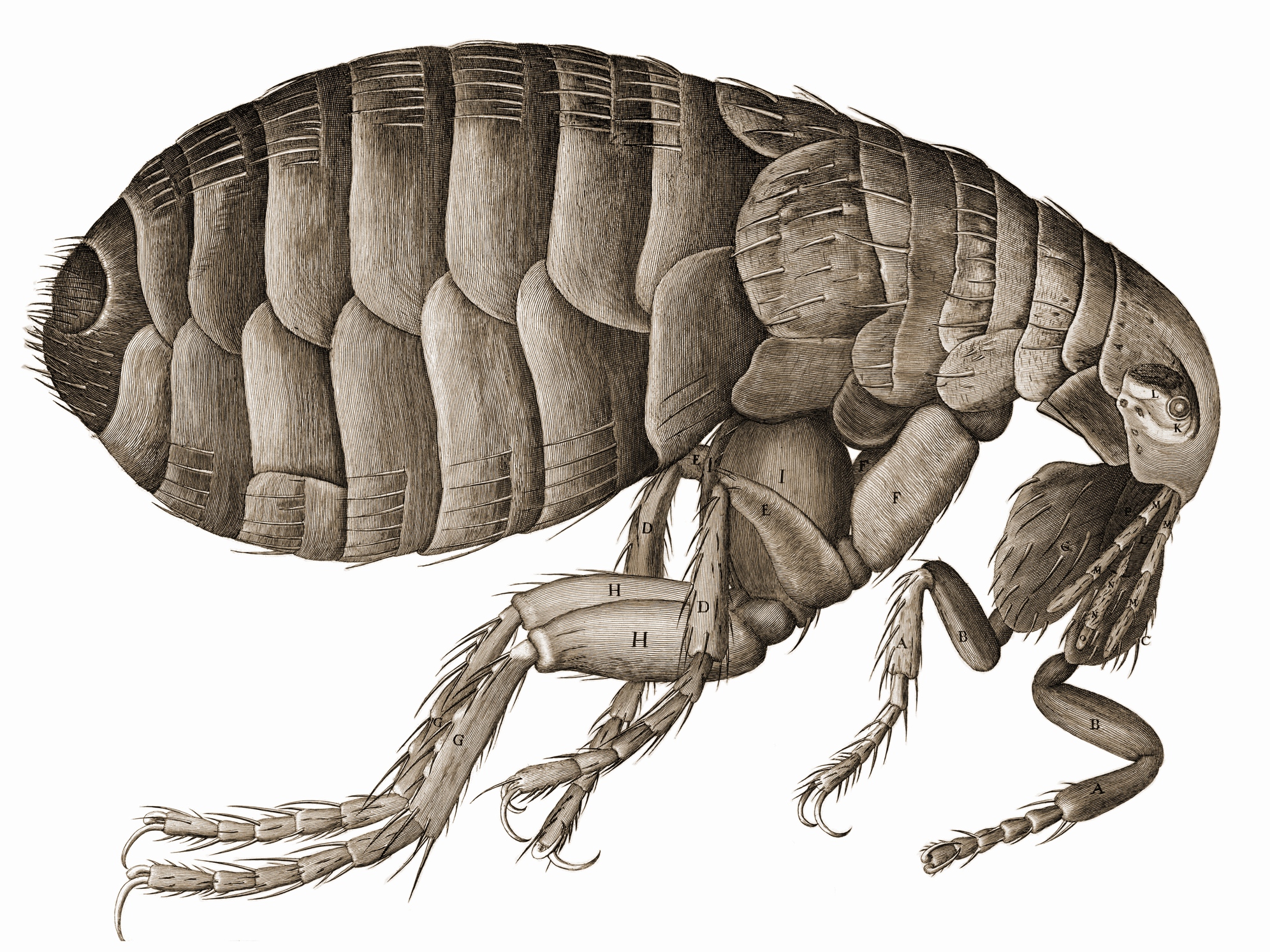
My own personal first proper encounter with 'the man who knew everything' took place at a sort of open day at the Greenwich Royal Observatory — the design and construction of which he played a significant role in — during which we were allowed to view a first edition of Hooke's famous engraving of a flea.


It is 18 inches in width, folding out from the Micrographia, and was almost certainly completed in the months immediately after Pepys's observation in his hidden diary.
Hooke's abiding obsessions were the largest and smallest objects in then visible reality. He is said to have been the first person to visualise a microorganism and constructed the earliest Gregiorian telescope to observe the rotations of Jupiter and Mars.
When Pepys first met him, Hooke was living in near poverty, but achieved financial security in the aftermath of the Great Fire in 1666 as a result of conducting architectural surveys across London.

Friday, August 28, 2020

Every four months...

Bumped into an old friend in town yesterday who is certain to have had covid-19 twice (from the same source - a nurse residing in his house). I had to restrain myself from taking a step backwards on hearing this news!

On each occasion he had no truly dramatic symptoms, just a high fever for four days and an inability to taste his wine — though the latter might be considered at least a little severe.
He's roughly my age, not pelón, of appropriate BMI and O+ as far as his blood goes.
He joked that he is due his next round in October, but he might as well start pencilling it in, because my wife's nephew the epidemiologist (employed by a lab in Atlanta), has since confirmed to me that he has seen reliable stateside data — based on the best available testing — that details a significant number of TRIPLE infections.
His view is essentially that we have always known from studies of pre-existing coronaviruses that the human immune response tends to be weak and almost never really long-lasting — and that any opinion to the contrary is wishful thinking.
I'd say there has also been some manipulation of public expectation by the second and fourth estates.

Both the biologist and and the ex-pat in Antigua expect 2021 to be a horrendous year here.

The so-called Oxford vaccine is thought by many to be our best bet, but as it won't stop you getting infected or spreading it to others, even calling it a vaccine is also wishful thinking.

Suppose the borders were to re-open here and this thus permits me to return to the UK to get this jab on the NHS. I'd be improving my own chances of avoiding severe disease in as yet un-confirmed ways. 

But unless the same 'vaccine' were to be rolled out here in Guatemala, locals would have to trust me to continue to behave as if other people's health was as important to me as my own, as I could easily go around as a super-spreader.

Saturday, August 22, 2020

Sputnik (2020)


The Soviet Union of the 1980s is becoming a sort of cinematic sub-genre of its very own. 

This excellent Russian sci-fi horror might be open to complaints of Ridley Scott derivative-ness, but largely heads them off by virtue of being set within a highly-stylised version of that extraordinary period. 

I say stylised, because here the deliberate drabness occasionally occasionally comes across as rather attractive. 

And the USSR of this period in my own memories is anything but stylish. There were some prime colours around, just in all the wrong places. 


January 30, 1665

...and Samuel Pepys is having some trouble sleeping:

"At this all day, and at night to my office, there to do some business, and being late at it, comes Mercer to me, to tell me that my wife was in bed, and desired me to come home; for they hear, and have, night after night, lately heard noises over their head upon the leads.
"Now it is strange to think how, knowing that I have a great sum of money in my house, this puts me into a most mighty affright, that for more than two hours, I could not almost tell what to do or say, but feared this and that, and remembered that this evening I saw a woman and two men stand suspiciously in the entry, in the darke; I calling to them, they made me only this answer, the woman said that the men came to see her; but who she was I could not tell.
"The truth is, my house is mighty dangerous, having so many ways to be come to; and at my windows, over the stairs, to see who goes up and down; but, if I escape to-night, I will remedy it. God preserve us this night safe!
"So at almost two o'clock, I home to my house, and, in great fear, to bed, thinking every running of a mouse really a thiefe; and so to sleep, very brokenly, all night long, and found all safe in the morning."


Arnhem by Anthony Beevor

Beevor’s latest tome takes on the WWII battle that perhaps fascinates me the most.


For what occurred around that last bridge in September 1944 is forever poised in that uncertain space between heroic British failure and epic British cock-up.

Our lot were left to assign themselves the trickiest bit of the operation with the least logistical support, largely because they dared not run the risk of an American airborne division being wiped out whilst under British command. (The Germans later wrote up a report detailing how the whole air-dropped advance had been back to front.)

That said, the ‘plan’, as such, was flawed on so many levels and Beevor doesn't hold back...

“Many historians, with an ‘if only’ approach to the British defeat, have focused so much on different aspects of Operation Market Garden which went wrong that they have tended to overlook the central element. It was quite simply a very bad plan right from the start and right from the top. Every other problem stemmed from that.

“Montgomery had not shown any interest in the practical problems surrounding airborne operations. He had not taken any time to study the often chaotic experiences of North Africa, Sicily and the drop on the Cotentin peninsula in Normandy. Montgomery’s intelligence chief, Brigadier Bill Williams, also pointed to the way that ‘Arnhem depended on a study of the ground [which] Monty had not made when he decided on it.’ In fact he obstinately refused to listen to the Dutch commander-in-chief Prince Bernhard, who had warned him about the impossibility of deploying armoured vehicles off the single raised road on to the low-lying polderland flood plain.

“Yet towering over everything else, and never openly admitted, was the fact that the whole operation depended on everything going right, when it was an unwritten rule of warfare that no plan survives contact with the enemy. This was doubly true of airborne operations.”

Monty’s reputation has certainly taken a a bit of a beating since my schooldays. As an Old Pauline he was quietly venerated in that institution, especially for his role in planning the D-Day landings. One of the key spaces in the school was permanently adorned with an example of the massive Normandy planning maps he’d apparently used.

I’d witnessed his state funeral in Windsor live on TV and was also aware how my uncle had served under him as a ‘desert rat’ in North Africa. Alamein was still seen as a key turning point in the war pre-Pearl Harbour.

But these days there’s no getting around the way he allowed ‘office politics’ to cloud his judgment in the formulation of Market Garden.

Beevor even suggests that part of the problem was that Allied commanders then felt somehow released from the need for extreme care that had preceded the establishment of the beachhead.

So far this is Beevor's most readable bit of wartime history, probably because he appears to be prioritising the narrative elements over the military detail that he has previously been over fond of. In the very first chapter he allows himself the levity of referring to 'A German regiment...' without further ado.

No matter how much one thinks one knows about these events, they retain their inevitable power to shock on re-acquaintance...

"Generalleutnant Walter Dornberger, the Inspector of Long-Range Rocket Troops, was later recorded secretly in a British prisoner-of-war camp speaking of the activities of his colleague SS-Standartenführer Behr. ‘In the Netherlands he made Dutchmen build the sites for the V2,’ Dornberger told fellow officers, ‘then he had them herded together and killed by machinegun fire. He opened brothels for his soldiers with twenty Dutch girls. When they’d been there for two weeks they were shot and new ones brought along, so that they couldn’t divulge anything they might discover from the soldiers."

And...

"Approximately 110,000 Jews out of 140,000 were deported from the Netherlands, and only 6,000 of these survived the war."


Thursday, August 20, 2020

Courage

A couple of days ago we received a call with the very sad news that a near neighbour, a man my wife as known for most of her life, had lost his fight wit covid.  

This man was personally responsible for the erection of the bell-tower on our local church. His family home is less than 200m away. 

Another denizen of this village, a first cousin of my wife’s, has also been taken into hospital with the graver form of the disease. 

Guatemala is currently reporting around 50 deaths a day, especially around mid-week, but this is only the mortality recorded in hospitals, so that individual who dropped dead in the pharmacy outside the Bodegona last week, or the woman who passed away on a Litegua doubledecker, will presumably not have made it onto Worldometer. 


Yesterday, as they announced a record 91% drop in profits, the Australian airline Qantas suggested that international travel is unlikely to recover at all before the middle of next year — and even if a vaccine should turn up in the meantime, they won't be restoring the US to their market before the conclusion of 2021. 


This has to be a clear indicator of the ongoing challenges faced by countries like Guatemala, which have tended to depend on the more adventurous, longer-haul forms of tourism. 


Spain tried to salvage its short-haul summer holiday season, yet it has been left in tatters. In per-capita terms they now have post-lockdown infection levels on a par with us here in Guatemala. 


Unlike Spain — Italy and France too — the UK is now comparatively well off. For levels of active infection in England are now at the equivalent of ‘green’ status in Guatemala. 


Yet the late summer surge on the continent has to be a source for worry for the government, especially as local spikes continue to occur in northern cities, in particular those with a larger proportion of families of south-Asian ancestry. Oldham may be about to be put in localised freeze. 


The enormous challenge presented by the re-opening of schools nationwide is also just around the corner. 


A new poll just released seeks to tease out just how brave Britons are feeling amidst the prevailing mood of uncertainty...


95% say they have left their home in the last seven days. 


However, 26% say they still feel uncomfortable about doing so. 


73% have met up with friends or family to socialise. Of these, 47% say they observed social distancing. 


Just 40% say they would feel comfortable sitting inside a pub or restaurant.


20% have cancelled plans to travel abroad.


Only 14% say they would be comfortable visiting a swimming pool.


Monday, August 17, 2020

Metropocalypse

There was talk this morning that economic activity across continental Europe is likely to settle at a level around 10% lower than the pre-pandemic one, for the time being at least.

Meanwhile a poll in the UK found that 86% of people say workers should be able to work from home until a vaccine is found. Of course, a complete medical solution to this problem may never present itself. 

This will inevitably feed the discussion about the likely medium term fate of the big metropolises like London and New York

San Francisco has also witnessed a massive exodus since the start of the year.

In Britain certain conservative factions would like us to feel passionate about the prognosis for Pret A Manger, poster boys for the important economic activity seemingly squandered in major city centres during lockdown.

Yesterday morning V and I were reminiscing about the lunchtime grazing options available in London during the nineties and then the noughties. Chains like Pret and the various branded coffee outlets clearly contributed to the fairly rapid decline of traditional sandwich shops in the West End. I’m thinking in particular of Battista’s in Charing Cross Road, close to the old Foyles, which eventually turned into a Caffe Nero. (Superficially, still kind of Italian, right?)

If there is some nuance to be added to the immigration discussion surrounding Brexit it is this. The old-style coffee and snack shops were the product of pre-globalised, twentieth century immigration. Most were family run, single outlet businesses. Wherever these little clans hailed from originally, they had come to stay.

Once displaced by the likes of Costa, Starbucks, Pret and so on, a newer, more opportunistic form of immigration took hold. London started to fill up with workers from abroad who, in the main, had little intention of putting down permanent roots. It was simply there as the most humungous short term opportunity in the EU block, and as such, just had to be milked.

Companies founded by British marketing and business consultants then took full advantage of this new mobile and temporary workforce. The immigrants of previous generations hadn’t a hope of competing, at least not with their existing models.

I’m no Leaver, and I have not been any sort of Londoner either for over a decade, but I do understand why many of my local-born friends in London of more or less the same age as myself, and equally averse to populist rhetoric, find it hard to worry all that much about the fate of the post-millennium coffee and sandwich industry in the capital.

They had their moment and they exploited it ruthlessly and not without collateral social damage. So if it is now gone, so be it.


Saturday, August 15, 2020

The Bay Of Silence (2020)

This can only really be enjoyed as a sort of anti-thriller, a movie that lurches around trying to tick all the boxes of the visual tropes of the genre, but is utterly clueless about how they are supposed to function narratively.


It is packed with irrelevances, starting with the Italian location that gives it its title, and which viewers are taken to, irrelevantly, at the beginning and then again at the end.

Then there's a possible lost twin and his (albeit briefly) surviving sibling, who turns out to the most glaringly irrelevant thing in the entire story.

His mother is less a character to care about than a walking plot device, while her own father would have had a sign on his head from first entrance saying 'bad'un' even if they hadn't chosen to cast Brian Cox in this role and then given him an entire Chekhovian cabinet of pistols.

As for Claes Bang. We enjoyed him over Christmas as Count Dracula, but it showed how he needs to ham it up a bit to escape from the innate limpness of his anglicised persona...although of course this is what worked so well in The Square.


Saturday, August 01, 2020

The Rental (2020)

Dave Franco's take on Airbnb paranoia and, appropriately enough, fraternal collision. 

His direction is solid (carefully avoiding the direct portrayal of violence against women; unusual for this genre) but the material has certain weaknesses — that unfortunate combination of predictability and slowness to ripen.


Tuesday, July 28, 2020

Buffeted


Come oooooon. This is taking the piss. How can it even begin to be allowed under current restrictions? 

Eagle-eyed viewers last night may have spotted that in ‘red zones’ like ours, reopening restaurants seem to be permitted one customer per ten square metres. (Must everyone eat alone?) 

It was all a bit blurry and flashed by pretty quickly. But a buffet adds a level of confusion and avoidable risk that has to be properly discouraged by our municipal authorities e.g. people getting up from their tables, utensils being shared and so on. 

Indeed, buffets were one of the first things stamped out in Singapore for that very reason. OK, they are especially keen on stampings out over there, but they have squished the coronavirus quite successfully too. 

Two weeks ago Dr Giammattei established the principle that activity would be recommenced based on a daily tally of cases. Utter madness. 

So yesterday evening back he comes, having reached — or been helped to reach — the obvious conclusion that his traffic lights would have to be driven by a calculation factoring in a fortnightly account of active cases, the number of tests and the positive test rate

In other words the very methodology he should have announced two weeks ago, except back then he was really quite specific about the numerical checkpoints, yet on this occasion he seems to be leaving us to try and figure it out on our own. 

Last time he also left himself with a proper backstop, such that should we experience another major spike, red would actually mean red. 

Red has instead been rejigged to mean pinky orange, such that no matter how many people start to croak, the bleeding Esmeraldas and Orellanas will still be carving each other up on the carreteras.

At this rate we'll end up like Texas en un dos por tres


Wednesday, July 22, 2020

The ex-pat pastel...

Broadly speaking, outsiders putting down roots in Antigua do so to become either a somebody or a nobody.

There are various ways to cut the cake, but this particular distinction between the individuals that settle here is significant, and perhaps never more so than during the present pandemic. 

For those who are here as a retreat from ambition tend to be coping a bit better than that other group dedicated to making this city their theatre of dreams.  

Amongst the retreaters, so to speak, you might expect to find the bulk of those who are literally on the run, people who in their previous existences have been a serious disappointment to themselves, or more awkwardly, to others. 

Yet in practice there appear to be just as many of their sort striving away amidst the more goal-orientated gringos.


Monday, July 20, 2020

Oxford vaccine news...

As a member of Cambridge I have some disclosable lack of objectivity, but I found today’s announcement regarding preliminary trials of the Oxford vaccine underwhelming. 

It’s safe e.g. minimum requirement met. And yet can cause a fever, and so inevitably will create some disruption during rollout and a possibly larger number than otherwise might elect to refuse it. 

We still don’t have a proper sense of how protective it is or, maybe more crucially, if it reduces infectiousness. 


Saturday, July 18, 2020

Relic (2020)

First time Aussie director Natalie Erika James has set about trying to do something unwonted with the horror genre, examining the age-related onset of a consuming loss of mental acuity and balanced personality in terms of a haunting. 


I started to develop reservations as I read the synopsis and never really shook them during viewing. The movie has to juggle three elements: the trappings of the genre, a situation in the county outside Melbourne that is almost excessively metaphorical and the very non-supernatural spectre of incipient dementia within a multi-generational family unit. 

During the first half, as the tension builds and the aforementioned elements are blended, the experience is suitably creepy and captivating, but ultimately the mixture doesn't seem to hold together. 

There’s a lot left unsaid in this scenario such as the absence of male partners, the fact that mother and daughter appear to be only-children, and while some of this has a positive dramatic impact, overall the effect is a bit swiss-cheesey. 

I suppose part of the issue here is that the film is better directed (and performed) than it is written. It ventures into extremely interesting territory only to leave one with a sense of having been led into a dead end. And there are times when it feels like a drama of people running around shouting ‘Mum’ a lot. 

It does however pass the Bechdel test with flying colours.

Oddly enough, this is the second haunted house movie we’ve watched during lockdown where the internal dimensions of the home prove somewhat unreliable. 

I’m starting to think that there’s a subset of developing chill features that should be equipped with a dialogue box that pops up three quarters of the way through warning viewers that they might not find the finale entirely to their satisfaction and providing a little button to discreetly bring proceedings to a premature conclusion.

There are horror movie third acts that essentially ruin the whole experience. This isn't one of them, but James had left herself with nowhere else to go other than off the ranch.