Tuesday, May 09, 2006

Brokeback Mountain

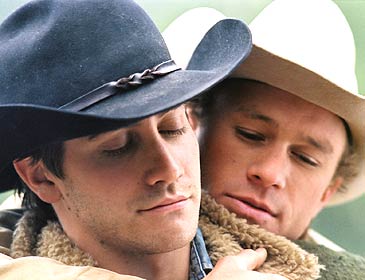
Maybe Crash deserved its controversial points victory. Ang Lee's film is like one of those fancied fighters that only ups his work-rate for the last few rounds, winning them convincingly, but perhaps not really making up for earlier plodding.

Given that the script for this full length feature swelled out of Annie Proulx's short story, what intrigues me is where the author's chosen emphasis lay. The slow start in the mountains, the awkwardness bordering on comedy of the mid-section, or the pathos and bitterness of the last act? I shall have to find out.

Often the best way to show people the truth (and the lies) of their own lives is to reveal to them resonant dilemmas faced by characters that are in some important way very different from themselves. The face value of this story is of course very high, but it can also be taken as a more general allegory about the ways we find to waste our lives, which often start with a failure to act on the glimpses of transcendence that many of us are granted in our youth.

Sunday, May 07, 2006

Lost Embrace

Fairly funny (and almost moving) Argentine comedy about a group of individuals that own and run small units in an underground shopping arcade in el once, Buenos Aires.

Specifically it is the story of Ariel, a young Jewish man set adrift by the feeling that his father abandoned him as a baby to fight the Yom Kippur war in Israel, who has decided that he must somehow flee the confinement of this little world, even if it means becoming Polish. It's basically a series of bittersweet comic sketches, shot almost in documentary style, with the story of Ariel's eventual reunion with the father he lost holding it all together.

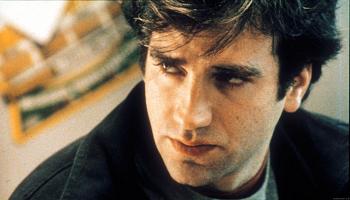
After a long time wondering why there weren't any good movies showing in London, a whole bunch of them are about to turn up. Against my better judgement I have committed to see The Da Vinci Code with Surfer at the Kensington Odeon, but closer to my office at the Curzon there will shortly be showing another film by one of the betterFrench directors of the moment, François Ozon, entitled Le Temps Qui Reste and Down in the Valley with Edward Norton which looks excellent. I'm also looking forward to Secuestro Express a frenetic exploration of the kidnap phenomenon in Latin America and Tony Takitani, based on a story by Haruki Murakami. Next up will probably be Lemming though.

La Sombra del Viento

It begins and ends with a trip to a place called The Graveyard of Forgotten Books and personally I couldn't think of a more suitable home for Carlos Ruiz Zafón's mega-bestseller.

Can so many Spanish readers be wrong? All I can say is that they do seem to revel in this kind of flat-pack 'classic' − with Arturo Pérez-Reverte being the biggest literary brand in this espacio...up to now.

I began by thinking I'd pass this novel on to V's bright and imaginative niece Raysa when I finished it, but have now concluded that it is neither childish enough for children or grown-up enough for adults.

The story is a sticky web of jumbled destinies within another of jumbled genres; in essence a blend of middle-European Gothic fantasy and sub-Dickensian detective piffle. And frankly, it's not really a story that needed to be told.

English-language reviewers try to draw what they see as the obvious stylistic comparisons. "García Márquez meets Umberto Eco meets Jorge Luis Borges," suggested Richard Eder in the New York Times. (In fact it's a lot closer to Isabel Allende − and yet there's more substance to even her brand of storytelling!)

Aside from the early reference to an impossibly large library, the comparison with Borges is especially unfortunate. When The Garden of Forking Paths was submitted to Argentina's National Awards for Literature the judges claimed to see in it "certain deviant tendencies of contemporary English literature" and declared that it hovered "between the tale of fantasy, a pretentious and recondite erudition and detective fiction." These were unfair criticisms of Borges' fictions, but would stick if thrown at The Shadow of the Wind. (Agh! Even the title is annoying!)

In spite of one significant 'fold' in the narrative, and other metaphorical markers of complexity, the plot advances rather like an adventure game where the protagonist moves forward in a strictly linear fashion, meeting strange new individuals and proceeding on the basis of the information they impart.

In the main the tale is narrated by one young man, but there are some odd switches, including a ludicrously extended suicide note that lasts for 81 pages. Most of the characters are really just ciphers for the novel's simplified moral universe. Indeed the city of Barcelona itself is the only personality in the story with any real depth.

Zafón has written extensively for the big screen and here spends far too long for my taste setting each scene visually. He is also one of those authors who seems more at pains to show us how much he cares about his characters − and they for each other − than actually giving his readers much reason to care about them.

I'm generally not that good at advance-guessing narrative surprises, but I could see all the key twists and outcomes here coming from a mile off. As a result it became steadily harder to turn the pages. All in all, Zafón appears to have set out to severely test the theory expressed by one of his characters, that there are "worse jails than words."

Mission Impossible III

In an attempt to give a bit more substance to the persona of Ethan Hunt, the script for the third MI movie has fashioned him as an amalgam of James Bond, Jason Bourne and Harry Tasker from True Lies. Yet Hunt obstinately remains less than the sum of these parts; it's still just Tom Cruise. He even has a love interest cast as a Katie Holmes look-alike.

Surfer and I were once again well-positioned in row D of Screen 1 over at the Kensington Odeon, our preferred venue for the louder sort of movie. (The volume in there really is optimised for noise rather than dialogue.)

Entertaining yet exhausting would be my final verdict. "It seems to have moved up a gear since the last one," commented Surfer with a yawn at the end. Either that or we have shifted down one!

In the same way I now lack the mental agility to get my head around some of today's first person computer games, many of the faster-paced sequences here were playing just beyond the limits of my perception. I also found this kind of ultra-jerky camera-work annoying in the Bourne Supremacy, but at least agency outcast Bourne interacts a bit more deeply with his foreign locations.

In spite of all the bangs and the running around, there isn't actually that much action, at least not in the sense that John Woo, director of MI:2, would understand the term. Hunt's foe here, Owen Davian, appropriately matches him for lack of substance. Yet Philip Seymour Hoffmann makes the most of two scenes where he is charged with exuding a deeply menacing nastiness; it's just a shame he has to do a 'talking bad guy' stint at the end. By then, making Hunt's life unpleasant in a rather complicated way seems to have become more important to him than whatever his original scheme was.

How many times does Ethan Hunt have to be betrayed by his own colleagues before he starts to consider a career change? If it wasn't for the perfect American white picket fence life that seems to be beckoning here, you'd certainly be asking some serious questions about the source of his motivation.

Another quibble: the plot-shifts in the final Shanghai sequence seem to invalidate at least part of what we have seen earlier. (Spoiler: if the agency chief isn't in league with Davian, who had the authority to call in the air strike and the black choppers?)

There was one good bit of unintentional comedy - one of Hunt's IMF colleagues explains his vision for the endgame thus: "And then we'll do what America does best...clean up." Hello...Iraq?

Friday, May 05, 2006

The Price of Fish

Got myself up at the crack of dawn this morning and went to Billingsgate Market. I quickly regretted not having remembered to take my choco-movil along, as there were untold opportunities to snap away at extraordinary things. So, until I return there next week, you'll have to make do with this pic I snatched of Billy Zane at the Chocolate phone launch party on Wednesday night.

The old boys that hearteningly call me "young man" when I buy stuff are still there, but their wares now include exotica such as Croaker , Kingfish and pink Dorade. There were even a few cases of shark. I stopped at a stall run by Sri Lankans to gawp at an enormous Barramundi laid out on its polystyrene cargo box and some very edible looking Emperor fish, which I must investigate further.

I have an old friend coming for dinner tonight who has just completed a week of chef's training with Cornish crone Rick Stein − so I thought I might try something fishy. In the end I came away with my usual box of shrimp and some Barracuda steaks. (I once helped cook Barracuda in Belize, but that was over a wood fire, not something I will attempt to replicate tonight. )

With 16 years on the island I haven't really taken enough advantage of this incredible local resource. It's the getting up at 4am and smelling of fish for the rest of the day that has tended to deter me. This time I put my clothes straight into the washing machine, my shoes out on the balcony to 'air' and doused myself in Polo before setting off to work. Hopefully nobody will be any the wiser!

The rest of the customers at the market this morning were generally Chinese or Africans, many of them lugging black bin bags full of ocean produce around from stall to stall. Just me and the crows in the ASDA car park a bit later on at 5:30am. Now that it has become a 24-hour supermarket, this really is the best time to shop as you get the pick of the day's fruit and vegetables.

We've been supporting LG's launch of the Chocolate phone in the UK this week by setting up a blog (and accompanying blogger-relations programme) and by playing around with these nifty little mobiles ourselves. The launch party was held at Sketch on Wednesday night with a host of decorative types on the guest list and Goldfrapp on stage to perform tracks from their new album (released on Monday).

As well as Billy Dead Calm Zane, Jade Jagger, June Sarpong, Brett Anderson, Sean Pertwee and Colleen McLoughlin all put in an appearance. Speaking of whom, the loos at Sketch looked a bit like the sort of oxygen chamber that the future Mrs Rooney might have left her other half sitting in when she set off alone for our bash that evening. (There was a middle-aged Swedish blonde dressed as a French chambermaid on standby to hold your wine glass while you were sealed inside. )

It was my first time at Sketch. Seems to be a similar set up to Home House, but not quite as nicely fitted out, LG pod-bogs notwithstanding. (Sketch has a heinous website, Home House is expecting.)

As for the phone, I don' t want to be parted from it. (And certainly not forcibly, as happened with that Sony Ericsson I had − albeit briefly − in 2004. ) In the case of the Motorola clamshell I have just disowned, you always knew which pocket it was in, which is not necessarily a good thing.

For many males of my generation, some of the most desirable gadgets are those that remind us of the props from the science fiction shows of our youth, and on this front the Chocolate phone certainly delivers. There's something distinctly r-ET-ro about those glowing red buttons. It also reminds me of two other important technology classics in my life: the 'banana' phone (my last slider, now proudly stashed in a drawer with my Sinclair ZX81) and the very first touch-sensitive TV I got my tiny mits on way back in the 70s before even consumer VCRs had hit the market. (The loss of buttons on TVs and the rise of the remote had consigned this rather enjoyable technology to something of a wilderness exile.)

I think it's going to take me a week or so to re-train my thumb to handle the slightly different user interface.

The weekend beckons. I'm off to see MI:3 with Johnny Surfer, the only person I know that counts Tom Cruise and Matt Damon as his two favourite actors. "What a Philistine this man is.." was his response to Paul Arendt's hilarious review for the Beeb:
"The only real problem is Tom himself, who manifestly fails to convince as
a human being. With his plasticised musculature and ten kilowatt grin, he's less
of an action hero and more of an action figure. It's getting harder with each
film to divorce the movie persona from the sofa-vaulting loon..."

Proshecto Gotan

The tracks on Gotan Project's new album Lunatico are generally more downbeat than those on La Revancha del Tango − which is probably why they are playing at the Shepherd's Bush Empire this summer and not in the quad at Somerset House like they did back in July of 2003.

The album has its highlights though. So far my favourite is Mi Confesión, with vocals by some homies from BA called Koxmoz. It pinches a riff from another world music hit: Paris Dakar by Senegalese hip-hoppers Daara J.

Apparently Riff is also the name of the language spoken by the Berber peoples inhabiting Er Rif. How very WOMAD.

It looks like Somerset House has had to deal with some hoax announcements about the acts they've signed-up to appear there this summer:
"On-line adverts for shows by Radiohead, Kaiser Chiefs, Arctic Monkeys and
KT Tunstall at Somerset House in July 2006 at Somerset House are a hoax. All of
these artists will not be performing at Somerset House this summer."

Friday, April 28, 2006

Aye Aye

"It takes something special for us to have a bad day," observed one of the river policemen on the Sky Clipper this morning as he looked around for rucksack bombers.

The Thames River Police are based at what was once Execution Dock in Wapping, the place where the Admiralty used to hang convicted pirates at low tide.

A couple of years ago I wrote a review of a very entertaining revisionist history of one of the unfortunates executed here - Captain William Kidd.

Kidd went to his death convinced of his own innocence...and very drunk. According to Richard Zacks, the real villains were Hollywood's long-term favourites − wig-wearing British toffs − that had set up this uncouth but otherwise good-intentioned sea dog and sent him off on a privateering mission that was both morally and commercially suspect from the outset.

Condemned men were permitted to stop at every pub en route to the gallows. This is why today there is only one pub along Oxford Street, which leads to Marble Arch (Tyburn).

From the natter of the rivercops this morning I gathered that there's something wrong with the grog at The Captain Kidd, the pub which overlooks their pier. "Two pints and you feel terrible the next day." And apparently it's not just the beer; the spirits served there have this strange effect too!

Thursday, April 27, 2006

Tristan + Isolde

Had a bit of a popcorn dinner last night. We left the cinema too late for a proper meal.

Anyway, I'm not having any trouble getting to sleep these days. The combination of the World Snooker Championships and camomile tea is like a natural alternative to chloroform.

The quality of this film − the story, sets, performances, and overall dark age grittiness − fluctuates like a melody carried on the wind.

It's clearly not sure whether it wants to be Shakespeare, Tolkein or Robin of Sherwood. One very consistent note of excellence throughout though is Rufus Sewell as Marke; without him the sense of clunkiness would surely have predominated.

Sophia Myles (soon to be seen as Madame du Pompadour in Doctor Who and formerly Lady Penelope in Thunderbirds) is another fluctuator. Her Isolde is at once a feisty modern Irish lass and a shameless femme fatale. James Franco does an OK job as brooding Tristan, except whenever he's with her, when he turns into a kind of rigid, wet-eyed Cyberman. There's one very good set (Castle D'or) and the most is made of various Celtic landscapes.

Writer Dean Georgaris attempts to build our engagement with what is a rather weak political backdrop, a tale of savage Irishmen attacking a divided, yet multicultural post-Roman Britain. One of these savage Irishmen, Paddreggh (briefly Isolde's prometido) looks like Sir Anthony Hopkins after a bad case of steroid abuse. Isolde's handmaiden reminded me a bit of Mrs Doyle from Father Ted.

Up until now the version of this tale that I was most familiar with was Wagner's opera. It has often surprised me that there haven't been other cinematic attempts to tell what has to be one of the supperior pieces of native northern European mythology, but an awkward ending might be part of the problem. (Heroes generally don't die in fair combat with the villain.)

Georgaris has attempted to explain the mystery of why Tristan, a Cornish hero, has a Pictish name. He's also shifted away from Wagner's synopsis in a number of significant ways. Firstly, the couple are thrown together by fate and physical attraction leading to a romantic bond − and there's no sign of a love potion anywhere.

Then, Isolde is left alive when Tristan croaks (literally), only to be "disappeared" by some text running before the end credits. Perhaps Kevin Reynolds didn't think contemporary audiences would be up for the liebestod, the 'love-death'. (No room either for Iseult of Brittany and the white sail/black sail strand of the legend, and Melot is now Marke's nephew, not Tristan.)

Ridley Scott is one of the executive producers. It must have been him that laid on all the mist in the forest.

What a mula!

A girl was arrested at São Paulo airport yesterday after she was found to be carrying eight iPods in her vagina. Maria Full of Grace....Jones. We can be sure that Apple won't be tempted to do an ad showing the storage problems involved with the equivalent number of CDs.

Mocteconsuma

It is a little known fact, but the foreign visitors that spend the most money in London are...Mexicans.

If we in the developed world invest in brands because they say nice things about us, rich Mexicans spend money as if the world will come to an end in a fiery apocaypse the moment they stop!

In fact, it's a mentality common amongst South and Central America's affluent. It's founded on a naive materialism and a deep existential fear. The ownership of stuff is what shores up their otherwise precarious membership of the international community of consumers, creating an important pyschological distance between them and the creditless millions back home.

It's the big three of Mexico, Brazil and Argentina that seem to produce the majority of these pathological purchasers, and the Argies are surely the continent's most incurable wannabes.

"Because he's never going to buy me a swimming pool" was how one Argentine lass explained to the Professor the reasons she was breaking off her long-standing relationship with one of his best friends. Surfer has also just fallen (very) foul of the Argentinian dream, and how can I forget how yet another girl from B.A. described how she wanted to fly the Chanel flag from a flagpole outside her house, just like the ones in Old Bond Street.

Typically we blame globalisation on the dastardly yanks, but Guatemala's Pollo Campero chain shows that locally-grown businesses in the developing world can aspire to making the world an uglier and same-ier place too.

There are now 417 Camperos across Central America and their expansion into the US a couple of years ago has been very successful. This year the doors will open to new restaurants in Jakarta (Indonesia) and in Madrid. They may not play baseball with their birds like Bernard Matthews, but the expansion and diversification of this chain is hardly good news for animal wellfare across the globe. Only HN bird flu seems capable of stopping them now. (Indeed I've read that the 3 branches planned for China have been put on hold.)

Wednesday, April 26, 2006

Extra Toppings

The Beeb had an interesting story yesterday about a pizza oven containing 440lbs of cocaine that was captured by customs officials in Barcelona. We happen to know a former US public servant in Guatemala that used to use a wheelchair for this particular commercial activity...and the head of the Nestlé plant on the road between Antigua and our house was also caught exporting Bolivian marching powder in the baby milk formula.

It was also reported the other day that the Panamanians are planning to widen their canal. Perhaps the Yanks are helping to fund this in an effort to cut themselves loose from the increasingly bolshy southern continent? It may be a while yet before Guatemala gets its very own Evo, but Chavez is already anticipating a November electoral come-back from Daniel Ortega and the Sandinistas, and a victory for populist Manuel López Obrador in Mexico still seems on the cards. So the problem may already have spread north of the Darien Gap.

According to Prensa Latina in Guatemala Customs officials have been suspended after "an unpredicted inspection at the La Aurora International Airport in this capital discovered eleven extortion cases carried out on tourists, who were asked to pay at least one dollar to allow them enter the country."

One dollar!? Muertos de Hambre!

Reminds me of an English solicitor who thought he was being very clever slipping a $10 note into his passport as we passed through Mexican immigration into Belize in 2004. In fact all the other foreigners on the bus were only scammed for $5, so he paid double the going rate up front.

The National Police in Guatemala are − for the time being − no longer permitted to issue traffic fines after it was discovered that their brand new IT system was being used for a game of reverse postcode lottery which generated windfalls for participating officers by randomly issuing penalty notices to addresses on the database.

SAIA, the Secretary's Office for Anti-Drug Trafficking Analysis and Investigations is now similarly banned from direct involvement in the capture of narcos after the disappearance last month of half a ton of cocaine that was in their custody. The men that did the disappearing were dressed as Police Officers. From now on SAIA will be limited to intelligence support.

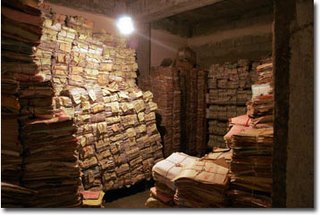
The picture above is of the long lost Guatemalan Police archive, discovered by intrepid local archaeologists in November 2005!

Blagger Outreach

There may be no such thing as a free lunch, but the evening meal is still an option for blagger-outreach activities. One such event I attended last night, which involved fine French nosh, nichely-interesting conversation and free-flowing Rosé . Never a good idea.

The Professor came along in search of expert advice about what to do about all those students that are photographing him and blogging about him during his lectures. There's a worrying precedent over the pond: Ratemyprofessors.com.

This morning I watched a traffic warden taking digital pics of all the cars he ticketed.

Ugalde

V met a rather interesting character on Good Friday - Professor Carlos Ugalde, traveler, photographer and regional actvist. Born in Metehuala, San Luis Potosi, Mexico, he moved with his parents to California at the age of six. He got his BA from UCLA in 1970 and has been Associate Professor of Latin American and Latino studies at Glendale College since 1980.
Prof. Ugalde has made many trips to Central America (14 during the 80s) but had never taken the time to visit Tikal, an oversight that he corrected last week.

A self-taught photographer, he has published photo-essays in both Mexican and International publications and some of his images can be seen online. He visited Cuba in 1997 for the ceremonial burial of el Che and returned the following year for the visit of the Pope. He told V that he has a photo of the Pope with Fidel Castro which he is very proud of!

The country of Professor Ugalde's birth produced some colourful news stories last week. First a priest called Cesar Torres confessed on Thursday to strangling the mother of his love child on Easter Sunday. The couple had been in a relationship for years and had a daughter 18 months ago. Torres carried the body to a bathroom and chopped it up into little pieces using a kitchen knife, before dumping the remains in a plastic bag in a cemetery - where the bodies of five other murdered women have turned up recently. Hmmm.

Meanwhile the heads of two decapitated policemen turned up in Acapulco. Both had taken part in a shoot-out in January in which four drug traffickers had died. "Para que aprenden a respetar" (So that you learn to respect) said the note left with the heads.

Poll results released last week also suggest that the final stretch of Mexico's presidential campaign may yet be tighter than expected. Two of them put Felipe Calderón (PAN) within four points of Andrés Manuel López Obrador , the former mayor of Mexico DF.

(Ugalde has a younger namesake in Mexico's Federal Electoral Institute who has been tackling controversy surrounding a bill regarding election TV spots forced through a supine Congress by the country's two broadcasting giants, TV Azteca and Televisa.)

Brazil, Chile, Venezuela, Argentina, Bolivia already sport the kind of executives that the yanquis would have worked very hard indeed to undermine during the Cold War years. Obrador's PRD represents the same sort of odd blend of left-leaning populism, nationalistic sentiment and powerful cult of personality that typifies the new politics of Latin America. Many of the established parties that depended on old-style patronage are losing ground with surprising rapidity to the ideologically-vague newcomers. Peru too could soon be in the hands of Ollanta Humala's year-old Nationalist party. The USA's meddling in the Middle East might signify that it is about to drop the ball in its own hemisphere.

Over in Bolivia an even more profound upheaval continues. A former maid with no legal training or even a degree (though she studied anthropology at night while working for the domestic workers' union) has just been made Justice Minister in Bolivia. Casimira Rodriguez went into unpaid domestic service at the age of 13. The National Association of Bolivian Lawyers has demanded her resignation, but her boss, Evo Morales supports her view that a lifetime of injustice is the most appropriate qualification for this post.

Tuesday, April 25, 2006

Livingston Buzz

When I first came to Central America in the late eighties, Livingston was something of a legendary destination. Sitting like a cold sore on the upper lip of the Rio Dulce, it represents Guatemala's small slice of the demographic eclecticism that is the Bay of Honduras. Even in a continent so full of the descendants of displaced nations that set out to make a fresh start of it, the population make-up of this region is truly fascinating.

In 1635 some slave ships out of Nigeria bound for the plantations in the Windies were shipwrecked near St Vincent. Through intermarriage with native Caribs − pretty much the last remaining indigenes in the Caribbean − the Garinagu people were formed: the "black Caribs". Their language is known as Garifuna and these days, so are they. (One of the names the island natives had for themselves was Kalipuna.)

Raids on neighbouring islands pissed off the Brits, who duly invaded St Vincent and eventually forced the black Caribs to surrender in 1796. Dividing them up into 'enemies' that looked more black than Amerindian and the 'misled' remainder, the British authorities deported 4000 of the former group to Roatán, a small island off the north coast of Honduras.

Just 2000 had survived the trip, but the numbers were soon growing and the Garifuna diaspora continued to the mainland. Today there are around 200,000, spread around both sides of the entrance to the Bay of Amatique. Livingston itself was founded in 1795, which suggests that the Garifuna already had a foothold in Central America before the loss of their tribal homeland.

Their leading cultural export today is Punta, a musical form which has links with an ancestral West African beat, appropriately named Bunda. ('Buttocks'). (Some examples here.)

Just to the north is Belize's southern exit-port Punta Gorda, around which Mopan and Kekchi Maya settled in the 1880s, escaping forced labour and taxation in the Petén region of Guatemala. There they joined a sizeable contingent of Confederate Civil War veterans dubiously persuaded to re-create the lost world of the Old South in the Toledo district's tropical climes.

There now seem to be many more of these Mopan and Kekchi over the border in Livingston and alongside the Rio Dulce. In the café-bar called BugaMama where we stopped for breakfast, the posters warning of the dangers of 'SIDA' were depicted cartoon couples in indigenous dress speaking their own languages. Livingston has one of the highest incidences of HIV in Guatemala, which serves to confirm many of the prejudices of southern Guatemalans regarding their comparatively isolated compatriots of African descent.

Unfortunately we didn't stick around in town for a more substantial meal, otherwise I would have been tempted to try Tapado, the most famous Garifuna dish - a fabulous fish and seafood stew made with both green and ripe plantains, yams, tomatoes and herbs, all simmered in coconut milk.

V's stomach was a bit sensitive that morning anyway. The night before we had dined at Los Delfines next to the municipal dock in Puerto Barrios. You pass through a tunnel of wooden slats lined with inflated rubber rings and end up at a table on a platform perched on stilts over the calm waters of the Caribbean. During the meal enormous black rats poked their twitching snouts out of the holes in the corners and cockroaches that you could wear as sandals scurried around between the gaps in the boards.

Felipe and I had a delicious ceviche. V's breaded prawns certainly looked yummy, but she was up most of the night. The water taxi ride across the Bay of Amatique had also been a little rough. Before reaching Livingston we had to pass through a thick grey wall of precipitation − it was rather like going underneath a waterfall, except that it lasted for about ten minutes.

I find that the locals up here have the kind of intellectual curiosity more typical of Belizeans than Guatemalans. Unlike Belize though, Livingston hasn't really kicked on since the eighties. Perhaps it's because it remains quite hard to access overland, and maybe too because many of the tourists visiting Izabal from highland Guatemala can now catch a first class bus from the capital direct to the Lake and the Castillo San Felipe.

But in doing so they miss out on the chance to explore the Rio Dulce from its very entrancing entrance - surely some of the most spectacular scenery Guatemala has to offer. Someone once told me that they made some of the Tarzan movies here in the 30s, but I haven't yet been able to corroborate this on the IMDB.

Also, just to the north of Livingston, is Guatemala's one and only white sand beach, which is usually a lot less crowded than many of the black sand beaches along the Pacific coast.

I'll sort out and publish my pics from the river in due course, but meanwhile, here's a selection from our day in Livingston.

(Incidentally, the title of this post comes from a great track by a Guatemalan band called Radio Zumbido.)

Monday, April 24, 2006

Ghost in the Shell 2: Innocence

Many cite the first Ghost in the Shell film as a primary precursor to The Matrix. In this instance the flow of cult borrowing appears to run in reverse, because Inosensu is in many ways an over-seasoned update of the Blade Runner recipe - a sci-if noir/cyberpunk anime splattered with disjointed observations about artificial intelligence, its narrative action periodically interrupted by utterly jaw-dropping cityscapes. (There's also more than a hint of debt to the more natively baroque imagination of Hayao Miyazagi.)

While "stunning" would hardly do the visual experience any justice, "deadening" would be about right for much of the dialogue. Shelley, Browning, Descartes, Asimov, Darwin, Milton and Confucius are all spewed out. In the mid-section there's an intense ten minutes of bollocks about the nature of dolls and children that almost had me reaching for the off switch.

Like the robots at the centre of its plot, this film is a technological marvel, yet somehow not quite alive. The most engaging and sympathetic animated character is a Bassett Hound.

The English version appears to have been re-written rather than just translated from the Japanese. I haven't followed the Japanese dialogue version all the way through, but perhaps it is a bit less pretentious.

Saturday, April 22, 2006

What's exactly being subverted?

After a decade of ever more prevalent "subversive" Internet technologies the world we live in is, if anything, less free than it was ten years ago. The more participatory our media become, the less participatory our democracy.

Related to this, there's an assumption in the plotting of The Constant Gardener that rang a bit of false note with me - that no matter how under the surveillance cosh you might be in the 'real world, in the virtual one information can continue to express its natural inclination for freedom.

In 1995 a search on the then quite raw WWW for "Guatemala AND organs AND baby parts" would have produced a qualitatively very different set of results to the same search today. You could argue about the overall levels of factual accuracy in both sets of results, but without doubt the earlier listing was more eclectic, with spikes of real controversy, often based on genuine insider insight. The participatory Internet appears to be drowning out such voices in a jabber of armchair opinions.

Guatemala's adoption industry (whose front end I encountered on March 29) continues to deliver grizzly stories from the back end. This week, a pair of local out-of-towners suspected of baby theft were beaten then burned to death by what the wires call an "angry mob".

Thursday, April 20, 2006

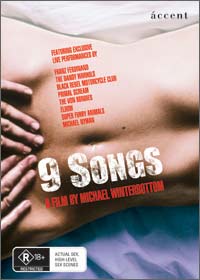
9 Songs

Roger Ebert's review had me laughing out loud: "The sex lacks context and Antarctica could use a few penguins."

Of course the sex lacks context in porno too, but somehow the lack of context is of a different nature here (it's not exactly what you'd call masturbatory material), and if you are not one of those people that will instinctively find this film boring and unpleasant, that alone may be cause for interest.

In pornography the viewer (or voyeur) is implict in the action. Here too perhaps, but the spectacle is designed not to excite, but rather to communicate some of the mix of claustrophobia and agoraphobia that Matt defines as the essence of his going-nowhere relationship with Lisa.

I was intrigued to learn that Michael Winterbottom originally intended to make a movie version of Michel Houellebecq's Platform. He certainly sets out to reproduce some of the sense of alienation and detachment that surrounds the French novelist's characters, yet by comparison, the romps described in Houllebecq's novel are unapologetically pornographic. (There's even a scene where a chamber maid spies on a couple shagging in their hotel room, before getting the nod to join in the fun!)

Having had two longish relationships with American girls, watching this particular on-screen coupling fell on the vinegary side of unappetising. The 'live' music is very good though, and took me back to that great Manu Chau concert at the Brixton Academy we attended back in 2003.

Tuesday, April 18, 2006

Counterrevolution of Conscience

The danger presented by religious absolutists derives from the form of their opposition to the integrative processes that have characterised the global system for the past hundred years. Even superficially benign belief systems tend to evil when they concentrate on negation.

The Mullahs may be the poster boys for this odious mob, but what one American proponent has called the "counterrevolution of conscience" is spreading its roots disturbingly widely outside the Islamic-fundamentalist heartland.

I was reminded of this by a unsettling article in the New York Times magazine a few weeks ago about El Salvador's abortion laws. Article 1 of the constitution of Guatemala's neighbour, framed back in '98, declares that the prime directive of government is to protect life "from the very moment of conception".

This means that none of the usual exceptions to the prohibition − rape, incest, fetal malformation, life of the mother − apply here. Ectopic pregnancies cannot be operated on until fetal death or rupture of the fallopian tube.

El Salvador's churchmen used to have a liberationist bent, notably murdered Archbishop Oscar Romero and his immediate successor, but the current occupant of the see is an Opus Dei nutjob called Fernando Sáenz Lacalle (pictured), one of the key instigators of this ruthless counterrevolution.

Other countries in the hemisphere (Chile, Colombia) may also operate a total ban, but only Salvador has such an efficient system of detection, denunciation and prosecution. As a result there are young girls serving 30-year jail sentences for 'aggravated homicide' involving the termination of 18-week foetuses. Indeed, the abortion of any 'viable' foetus is liable to lead to severe sentences for all parties involved.

Monday, April 17, 2006

Platform

The two novels I took with me to read in Guatemala could not have been more different: Michel Houellebecq's Platform and Carlos Ruiz Zafón's La Sombra del Viento (The Shadow of the Wind). It strikes me now that the strengths of each of these best-sellers are very much the weakness of the other.

More on Zafón another day; suffice to say that the higher expectations I had of his talent as a writer were not entirely met. Houellebecq on the other hand, surprised me. Platform is a novel replete with startling thoughts, many of them indeed worryingly under-cooked a la mode francaise, but by no means as half-baked as some of his critics have insinuated.

The novel fully deserves most, if not all, of the sharp adjectives thrown at it: misanthropic, reactionary, provocative, obscene, fascistic, pornographic. It's also very witty, and a far more substantial book than I had anticipated when I first opened it on the flight to Houston.

Mario Vargas Llosa once described Houellebeq as "insolent", clearly intending this as a mark of his admiration for the Frenchman's work. It's insistent ambiguity was especially appealing to me. Others (in particular those with fixed template opinions) might dismiss this as dangerous tergiversation, but when worked into a topic dominated by hardened, polarised positions, ambiguity can be a very useful solvent.

A unnamed Dutch academic was recently quoted as saying that Houllebecq's USP is perhaps his willingness to reveal the vile 20% of himself that others generally keep under wraps. Yet it's undoubtedly his position on Islam that has earned him the greatest notoriety. "La religion le plus con," he called it during a TV interview on the promotion circuit.

In Platform he disingenuously inserts secondary characters at key moments solely in order to express the kind of extreme views that even his jaded narrative namesake stops short of. Two of these detractors of Islam are themselves Arabs, and their critiques are not especially sophisticated to say the least:


"The problem with Muslims, he told me, was that the paradise promised by the prophet already existed here on earth. To gain admission there was absolutely no need to fulfill the seven duties of a Muslim, nor to engage in holy war; all you had to do was pay a couple of dollars...the violence of some of them was no more than a form of impotent jealously."

"Islam could only have been born in a stupid desert, among filthy Bedouins
who had nothing better to do - pardon me - than bugger their camels."

However, beneath the raw prejudice, Houellebecq seems atuned to the threat posed to post-Enlightenment civilisation by a resurgent monotheistic mentality, of which the Islamic fundamentalists are the avant garde of the moment:
"The closer a religion comes to monotheism, the more cruel and inhuman it
becomes; and of all religions, Islam imposes the most radical monotheism. Far
from being an abstraction, as it is sometimes portrayed, the move towards
monotheism is nothing more than a shift towards mindlessness
."
Michel (the author) clearly also feels pounded from the opposite direction by the pervasive values of his own civilisation − mindlessness also comes in the form of the market, the information society and the culture of consumerism.


"The society in which I live disgusts me; advertising sickens me; computers make me puke."
His namesake in the novel feels trapped within a lifestyle he comprehensively rejects:


"I was attached to a delusive existence...caught up in a social system
like insects in a block of amber."


This is a state of affairs that Houellebecq is said to blame firmly on his parents' generation − life in a society constructed by the spiritual veterans of '68 appears futile to him.

His biographer has revealed how, as a child, he feared his father and despised his Bohemian mother, and this sense of disconnection from family life and hence from society as a whole undoubtedly pervades the novel. Michel the narrator denies "ever having felt any sense of solidarity with other human beings" and in the author's own words, "until my death, I will remain an abandoned little child, howling from fear and cold, starved of caresses." The opening paragraph of Platform, in which the narrator blithely reports his father's death, deliberately echoes Camus' L'Etranger.

For most of the book the narrative, such as it is, largely serves to give the central character − and others that he rubs up against − opportunities to express different shades of the author's own core worldview, to explain or demonstrate his Marxist-influenced conception of the sexual market, or to engage in what can only be described as hardcore pornographic sex.

However, a very violent third act is set-up when Michel persuades his accommodating new girlfriend and her energetic boss to set up 'Aphrodite'- themed package holidays. This sex tourism venture seems to be taking off when one of the resorts in Thailand is attacked by Islamic terrorists and many, including Michel's girlfriend, are killed. This fictional climax, written before both 9-11 and the Bali bombing, got its author prosecuted for inciting religious hatred, but subsequent events saw him claiming a degree of vindication.

Sunday, April 16, 2006

Without Prejudice

In his audio commentary on Crash Paul Haggis relates how he chatted with an Hispanic cast member from El Salvador with a Guatemalan mother who claimed not to have any prejudices; he loved everyone from all places equally. Yet the director got the following reply when he asked the actor "suppose I were to call you Mexican...":

"I ain't no fuckin' Mexican!"