More avocados, when available.
The one given though is a basket of freshly prepared
tortillas, wrapped in cotton cloth.
There's an old
indígena that looks after a small
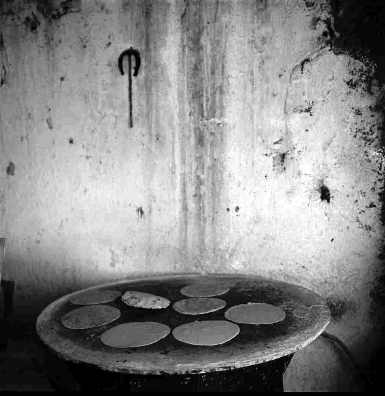
sávila (aloe vera) plantation near our house who each day at midmorning prepares tortillas for sale on her
comal, usually helped out by younger members of her family. There's always a queue.
The
comal de barro is a large disk of baked clay which is usually placed on three stones above a wood fire. After they have been patted into shape
the moist corn tortillas are grilled on it. My favourites are
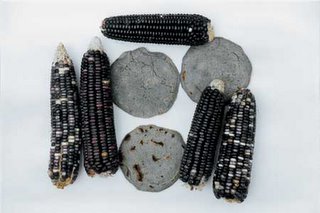
tortillas negras (above) made with black corn, which are usually reserved for special occasions and quite difficult to find in Antigua (though V's brother Felipe, resident in the capital, manages to consume them daily).
The issue then becomes what to eat with your
tortillas. The most famous local recipe (and one that V hates with a passion) is
Pepián. This is a dark, gungey cacerole dish usually made with chicken with coriander, cinammon, sesame seeds, various types of chilli, onion, garlic, and both red tomatoes and the little green ones known as
miltomates aka
tomatillos (which are next to impossible to find in the UK).
The fish I have most often found myself being served at lunchtime is
tiburón (shark). Another frequently-downed seafood snack is
Ceviche, possibly my personal favourite of all Central American delicacies. The principal is to 'cook' prawns, conch or even white fish in a potage of lime juice flavoured with parsely, tomatoes, onion and garlic. It is served with salty wafer-like biscuits.
In the area around Antigua the best ceviches are to be found in a small seafood restaurant on a backstreet of Jocotenango called
La Naranja Pelada. The dining room is wood-panelled and decorated with specimens of local 'game' such as snakes, turtles and armadilloes.
Yet the best
ceviche I ever had was in Mexico, at a beachside cafe called
Los Pelícanos in the fuss-free Yucatán port
Puerto Morelos. (Which sadly may not have been treated very kindly by Hurricane Wilma.)
I was once witness to an altercation a particular friend of mind had with the staff of a Mexican restaurant in Swallow Street when the dish advertised as
ceviche on the menu appeared on delivery to be something altogether less acid-bathed.
Eventually the chef came out from the kitchen to defend his creation from the imminent threat posed by the Trades Descriptions Act. Hyperventilating even more than normal for a Venezuelan, he explained how he had discovered the recipe in a tiny fishing village in Ecuador, and whilst he agreed that it didn't look much like what most people would call a
ceviche, he felt sure we would allow him some artistic license. He then explained the etymology of the word
ceviche and how it really means "
salad". He was soon back in the kitchen preparing prawns in citric soup for my particular friend.
Part of the problem was that you don't go somewhere called
Down Mexico Way to eat Ecuadorian fisherfolk food. Shortly afterwards the joint was renamed
Destino and continued to serve unusual and often original dishes from across Latin America until it closed last month. A pity because the building was the site of the first Spanish restaurant outside of Iberia (opened 1926) and the stunning internal decoration work was commissioned by the soon-to-be-crownless King of Spain.

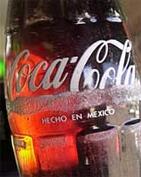 In the middle ages the Catholic Church constantly had to decide how to handle grassroots devotion that claimed a greater authenticity than its own. Some of these off-message brand evangelists were barbecued, whilst others (the Franciscans for example) were skillfully co-opted into the service of re-authenticating corporate orthodoxy.