Wednesday, February 01, 2006

Form over Substance

Steve Rubel's immediate response to Yahoo's apparent acknowledgement of Google's unassailable ascendancy in the sphere of search was to proclaim:"That's it...I have no interest in using a product that the company doesn't aspire to make best of breed."

Yet in fairness to Yahoo, they may actually be onto something. Of course this sudden reassessment of core objectives has been largely forced on them, but historically there has always been a vein of human intellectual intervention in the Yahoo approach, which has distinguished it from algorithmic alternatives such as Google. (Esther Dyson: "Yahoo is intelligent design...Google is blind evolution")

In general, when it comes to understanding things, there have always been two (mostly) separate currents in our thinking processes:

  • Substance (components, structure and quantity)
  • Form (pattern, order and quality)
The first, where we ask what things are made of and how they fit together, is the basis of all analysis and information processing. It's a methodology of measurement. The second, arguably the trickier, seeks to comprehend the configuration of internal relations − and patterns generally need to be mapped, not measured.

With all the processing power that has fallen into our laps over the past decade or so, it's hardly surprising that maps of pattern and quality have continued to play second fiddle to measurements of quantity and models of structure. Indeed, matters of quality are often supposed to be irredeemably muddled with meaning and values − compromised by subjectivity. However, the information processors typically anticipate that the problem of subjectivity will go away if the numbers are big enough - the so called wisdom of the crowd.

Google is still the best way of understanding the substance of the Web. In most instances, it's all we need to know: relationships are secondary.

Yet the very term Blogoshere, with its echoes of biosphere, suggests that social media represent a new order of webbiness where networked patterns of meaning and citation will matter more. By implication, counting up individual blogs may not tell you all you need to know about an individual organisation or brand's social media 'footprint'.

Last week Valla Vikili from Yahoo told a group of my colleagues in New York that the widespread use of social media heralded the "death of meaning". No longer would consumers so readily accept (and pay for) the meanings that communications consultants bundle in with products and services, because they now had the tools for making their own. And Yahoo has a growing interest in these tools. Their assimilation of social media start-ups like Flickr and del.icio.us surely reflects a strategy that is now perceptibly geared towards form rather than substance, which has been the natural territory of their great rival Google.

With home-made meanings increasingly emerging from and looping around the social media in unpredictable, non-linear ways (rather than being seeded into the earlier Web of comparatively atomised sites and pages) this may end up being the space to be.

Tuesday, January 31, 2006

Eating out in Antigua, Guatemala: Part 2

For transients, resident ex-pats and those (few) locals with gastronomically adventurous souls, Antigua hosts a catholic muddle of international eateries, but finding the right place on the right night often involves a fair amount of legwork. The city has an outward charm that is easy enough to appreciate just by strolling around its cobbled streets, but the parts that are most worth finding are more tucked away, restaurants included. In terms of bums on seats only a few ever reach critical mass, especially on weeknights, and the very best are usually the ones that look as if they have no real need of customers.

Central America's best hotel, Casa Santo Domingo not surprisingly boasts a fine dining room. It hasn't been too snooty to jump on the Bill woz here bandwagon, yet you might say that this beautifully-restored Dominican convent was where Clinton should have stayed during his well-remembered visit back in 1999. (In fact, as their website proudly confirms, the President kipped at the lovely 5-suite guesthouse La Posada del Angel.)

Now in an exquisite hidden garden setting comparable to the grounds of the old religious house, El Sereno (4a Ave Norte) serves probably the most expensive sit down meal available in Antigua. A few years ago, when this property housed a smart asador, there was a bizarre little Cuban bar in the grotto called Mojitos, populated by unlikely stylish specimens posing like extras from a Bacardi ad. (You would never see their like anywhere else in town.) Then and now the highlight of this establishment is the terrace bar which affords fine, elevated views of nearby patio gardens and the spinach-green northern flanks of the Panchoy valley.

In our opinion the best restaurant in Antigua is the Mesón Panza Verde (5a Ave Sur) − affectionately the 'Panzón Verde' − whose resident chef Christophe Pache (a shy Swiss married to a local girl) has conceived a menu that re-imagines classic European dishes with unique local ingredients. (I have enjoyed the sopa de chipilín.) Every month the gallery holds a semi-porous private view of their current exhibition, attracting a regular crowd of eccentric ex-pats, foreign diplomats and upper-end gringos. Highly-quoffable Undurraga cabernet from Chile is uncorked and Christophe sets up his raclette kit. Sunday brunch is also excellent and there's live jazz in the vaulted sala on Thursday and Friday evenings.

The quirkiest of our four top picks is Welten (4a Ave Oriente), run almost as a personal folly by its owner, a Swiss millionairess. It's certainly not one of those joints with an "hola amigo" type standing outside blocking the footpath whilst handing out leaflets.

V and I used to come here on our pre-historic dates to drink piña coladas in the compact yet intensely-ornate bar area with its walls of arabesque blue tiles and rows of mahoganny high chairs. We were often the only visible guests − rarely are there more customers floating around than alarmingly attentive staff. (The worryingly aged Germans that used to gather here on Sunday afternoons during the 80s have long since moved on up to the National Socialist Valhalla.)

On arrival you have to knock a couple of times on the big wooden portón before a face appears in a tiny inset door at what for the locals equates to head height. If they like the look of you the bolts are unfastened and you can walk through the conservatory-style dining room to the cushioned sofa-style seats at the tables around the pool, its surface invisible beneath a carpet of multicoloured rose petals. The food is savoury yet delicate; this time local recipes with a continental twist.

Part 3 will cover the well-patronised restaurants of middling quality clustered around the main square and along the Calle del Arco.

To be long the tail must be linear

It's significant that the ideas that best exemplify the culture of Wired these days are not those of co-founder and inspiring organicist Kevin Kelly, but long-tailed Chris Anderson, whose thinking has a strong analytical bias. And the likely long-term impact of the phenomenon he's pinned his name to is exactly that, a bias, because culture does not consist exclusively of objects on display on a virtual shelf. An atomistic view of culture can only ever deliver approximate predictions, because it ignores the non-linear ways that meanings are constructed.

A decade ago a golden age of vertnetztes denken (network thinking) seemed imminent but regretably, mechanical, linear, information processing models are if anything, stronger than ever.

Monday, January 30, 2006

Invasion of the Plot Snatchers

Lost lost me after three episodes and Invasion almost did after five, but last night's installment promised something of a mini-recovery. The ETs have splashed down to help solve the Everglades' in-breeding problem.

My enthusiasm for Rome was more or less bell-curve shaped. Only the writers and directors charged with the mid-section episodes seemed relaxed enough with the characters and key events to give the story proper shape.

These limited run not-so-mini series pose particular challenges to screenwriters...and to viewers. It's being reported that several US networks are experimenting with English-language telenovelas which, south of the border, tend to run five days a week for around six months.

Eddie Cibrian knows a thing or two about distended plotting from Sunset Beach.The trick is to set in motion a set of nested negative feedback loops. Every time a storyline moves forward towards its expected resolution, an equal and opposite force has to kick-in, returning the characters to their default location: the edge of absurdity.

Eating out in Antigua, Guatemala: Part 1

As in that other rather ill-fated urban grid laid up close to a bulging volcanic blemish, the homes of rich and the poor are fairly evenly spread across Antigua. Wherever a private residence has neglected to take up a whole manzana the spare square metres of the block have tended to be filled by humbler homes. The nearest thing to a des res district here is an avenue in the north eastern sector with lawn-fronted mansions and a long line of jacaranda trees resplendant around Easter-time: the Alameda Santa Rosa.

Many of these are second homes for capitalinos, encharged during their often extended absences to the care of paid guardians who − we have often reflected − enjoy quite an enviable life. One such is Doña Tona, a dark, abundantly fleshy mestiza that has established one of the most successful small-scale catering businesses in town, doing very nicely indeed for several decades out of the Antigueños' fondness for reassuringly familar, everyday things you could literally partake of almost everyday if you wanted to.

Emerging from an imposing set of wooden garage gates six nights a week around 7pm, Tona sets up a rectangle of benches on the path beside the lawn − covered by an awning in the wet season − and then sits down beside it surrounded by a buffet of covered earthenware pots, carried out and positioned by her young helpers. Soon smart SUVs with polarised windows are parking on the avenue and their occupants greet each other tentatively ("...no-ches") before squeezing onto free space on the benches. Neighbours often appear with plates and jugs in order to carry back Doña Tona's goodies to their own dining tables.

It's a smorgsgabord of chucherias tipicas. rellenitos (plantain filled with frijoles: sweet refried black beans), chuchos (a thick, meat-filled corn dumpling wrapped in tusa: fibrous cob leaves.), tostadas (a large circular corn tortilla covered with guacamol or frijoles, chopped cabbage and a red or green chilli sauce) tacos (potato-filled crispy tortilla cylinders) and dobladas (softer, folded tortilla semi-circles most often filled with chicharrones: pork crackling).

And there's a choice of different atoles to drink each day: atol blanco with a dollop of black beans and chilli, atol de ava (broad beans) atol de elote (sweetcorn) and my own personal favourite, arroz con leche: like a viscous rice pudding sprinkled with cinnamon.

Her huge, antique clay pots keep the food hot for hours after she prepares it. Sunday is usually the busiest day, when Tona appears with more elaborate dishes such as chiles rellenos (stuffed piquant peppers) pepian, revolcado, hilachas and tamales, both for the locals and visiting well-to-do that pass through the Alameda before hitting the road back to Guatemala City.

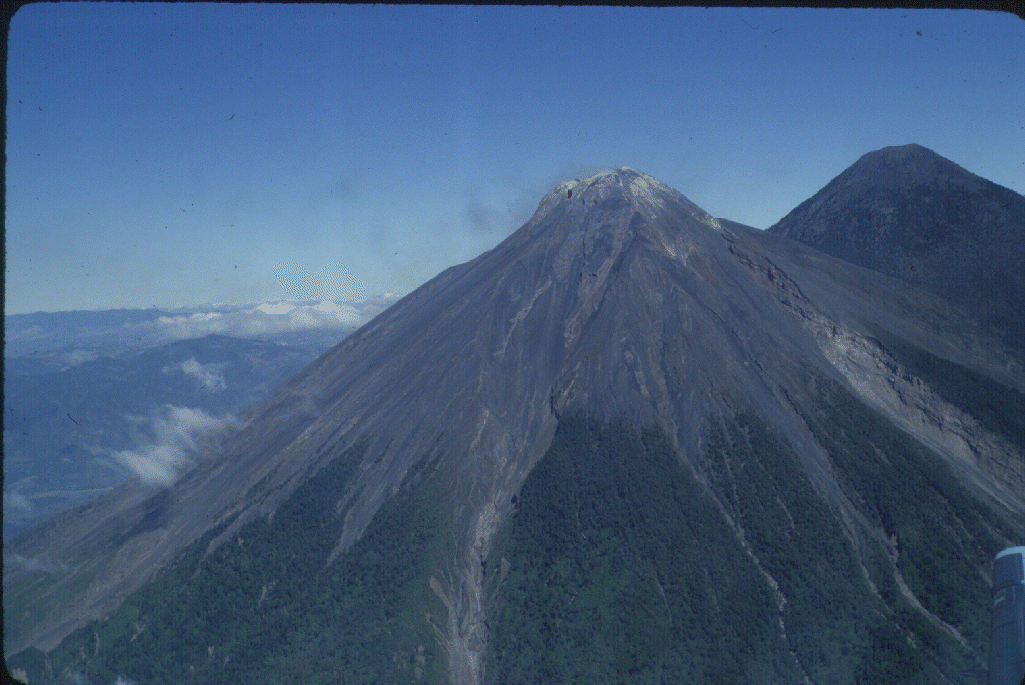
On most evenings a few people gather in the pools of dusk beneath the jacarandas waiting for the sign: if the light above the garage door illuminates after the sun has dipped behind the conjoined peaks of Fuego and Acatenango, they know that Doña Tona will be coming out again that night.

Antigua guards its secrets pretty well, but it seems that almost everyone is in on this one, except perhaps the transients.

Friday, January 27, 2006

Evo-lution not Revolution?


Still wearing that sweater, Evo Morales was sworn in as Bolivia's new President last Sunday and immediately proclaimed the start of a 500 year Reich of indigenous rule. I'm still wondering if he will have to stand down after one term like the Presidentes of Guatemala.

Serial non-stander-downer Hugo Chávez was there in La Paz to watch the inauguration of his soul-mate en vivo and the next day took the opportunity of publicising his views on America's likely future role in the region: "The empire has entered the phase of desperation, like a vampire who sees dawn approaching and realizes that he still has not sucked enough blood."

Eschewing burgundy and blue in favour of his tried-and-tested balaclava and pipe look, Sub-Commandante Marcos was out preaching to a large crowd yesterday, in Cancún of all places. It's the first time I've actually heard his speaking voice and was suitably impressed with the way he manages to imitate the peculiar Spanish diction of the indigenous peoples.

The Hair Shirt of Analytical Thought

Scientific revolutionaries (and believers) like Galileo, Descartes and Newton established the pragmatically very useful separation of facts and values, mind and matter, which in technological terms allowed the West to kick-away from the rest, but also left us with a legacy of analytical thinking habits that are often quite shy about their limitations.

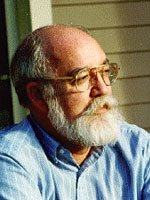
Hair-shirted atheists like Richard Dawkins and Dan Dennett aside, many intelligent people find a mechanistic explanation of life, the universe and everything somewhat unsatisfactory - which is why notions of non-physical interference (Vitalism, Deism, Spiritualism etc.) have continued to appeal. Indeed vitalism is the flip-side of atomism, both deriving from the original Cartesian sin of mind-matter dualism.

Vitalists add something to the laws of Nature to explain the missing bit they typically intuit, but in fact this isn't strictly necessary if you just stop thinking about the cosmos as a collection of parts. The missing ingredient could instead be the context, or as Fritjof Capra puts it, "an understanding of the organising relations"; as such requiring nothing outside of Nature other than an appreciation that the form and function of its parts are ultimately determined by the dynamics of the whole system.

Ant-e-Social

When I first spent an extended period of time in Central America during the late eighties I got to know a retired engineer from Dundee in Antigua who used to get the bus to the capital every few days just to pick up the British newspapers at the Embassy.

After my return there was a period between 1989 and 1994 during which we didn't go back to Guatemala and our only way of keeping in touch with events over there was by subscribing to the current affairs magazine Crónica which tended to reach the UK about a fortnight late each time.

In the Autumn of 1991 a friend of mine from the same apartment block in London came over and installed MS Mail for DOS on our PC so we could keep in touch via email. On New Year's Eve of that same year I had my first exposure to Compuserve and I can clearly remember the visceral sense of excitement at the possibilities that opened up that night.

By 1994 I was making my living as a sort of email consultant and it amuses me now to think how in those days we had to organise emergency meetings to figure out how to encourage the employees of the firm where I now work to use their email more!

On a personal level email was already our preferred way for keeping in regular touch with people we'd rather not see all that regularly on a face-to-face basis, but it would be a couple more years before we could begin exchanging asynchronous communications with friends and family in Guatemala (and one or two virtual-only chums too, a 90s social must-have.) Meanwhile, the news problem was had been comprehensively resolved by the Web.

This morning I posted a piece on my company blog about a session I attended last night in the offices of MSN in London. Windows Live Director Phil Holden had flown in to tell a select audience of denim and corduroy-clad geeks about upcoming updates to the platform and to formally initiate a process of ongoing engagement with key social media influencers.

I can however confide here that it worries me a bit that these days new features hardly ever give me the same sort of gastric flutters as that alcohol-fuelled Compuserve initiation.

Instead, for the past couple of years V and I have actually been trying to develop a more stealthy online presence, in part because when it comes to the goings on in Guate, being "always-on" is quite often undesirable. (It reached a stage where we had more blocked buddies on our Messenger clients than un-blocked ones: people over there would keep trying to get us involved in the most trivial of incidents with no appreciation of how the vast geographical distance between us would prove a source of great frustration.)

Perhaps synchronised complexity just no longer appeals in quite the same way. I've also drifted away from the line of work where these tools are endemic in the majority of colleagues' personal and professional lives (like iPods!).

I can't help feeling that the current crop of online portals create as many needs and anxieties as they once appeared to satisty. And that more often than not the best buddies you can find are actually the ones that are outside − or at least on the margins of − the system.

Of course technology has enriched my life over the past decade, but there's no doubt that it has also impoverished it on other, often unexpected levels , and as I get older and wiser I've had to start making a few compensatory adjustments.

V increasingly talks of simplifying things, cutting away all the stuff we don't really need, usually holding up to me the chilling example of my mother, whose latterday lifestyle has become almost exclusively stuff-focussed.

Individualisation, especially as facilitated by technology, can be like a stimulant. The more you have the more you need because eventually each new shot delivers a smaller and smaller hit. And the more you actively pursue your goals and self-image through the commodity culture, the higher the risk of long-term passivity.

E-books

Being a long-standing book lover with a collection that I like to stand and stare at proudly, I have mixed feelings about e-books and electronic ink.

Would I rather have all the books in my collection available on a device like SONY's Libri? No. But as well as having all the physical tomes on my bookshelf, I would appreciate having digital versions of the text that I could search etc. (The etc. part could be more than adequately covered by a tool like Frode's Hyperwords.)

I wonder whether we will one day get an access code with each book we buy allowing us to download a personal digital copy of the text?

Not Completely True

One last follow-up to Scott Adams's proof that Evolution isn't completely true: next time he burns himself, Scott should remember that in the same way that Evolution isn't true for photons, temperature is a property that looks pretty meaningless to atoms. And if as a result of that unfortunate scalding he jumps up and bangs his head on a solid object, it would perhaps be equally consoling to reflect that solidity is not something subatomic particles know a great deal about either.

Wednesday, January 25, 2006

Neo-Dilbertianism

Scott Adams has been winding-up the Neo-Darwinists again with some cunning logic: Evolution can't be completely true because relativity theory precludes the existence of an objective frame of temporal reference in which species could "evolve over time". So, "if something is not true for all observers, it is only a point of view."

Indeed you might say that Evolution forms the point of view of molecules. For Neo-Darwinists, there's not much more to it than that, but amongst the more expansive (and more poetic) alternative descriptions is that which sees Evolution as a thread through the web of life connecting up the various molecular perspectives that (could) exist in relative spacetime. Borges might have called it a pathway through the labyrinth.

Einstein's theories of Relativity and the other major paradigm shifts in twentieth century physics could all be said to pose fundamental philosophical challenges to the bottom-up, mechanistic outlook − not just as it expresses itself as the reductionist neo-Darwinian interpretation of evolutionary theory. Yet whether your perspective on it is deep or shallow, Natural Selection remains the only reputable explanation for the existence of sentient observers in the first place.

From a photon's speed-of-light perspective it would be hard to observe evolution in action, but that frame of reference is as close as you would ever get to stepping outside the labyrinth, a likely point of rendezvous for both objectivity and subjectivity.

Bad Theology

Justin E. H. Smith is suspicious of theologians that seek a partial rapprochement with Evolution. The result he says, is not only bad science, but bad theology too.

In general Protestants are more inclined than Catholics to neo-occasionalism, the view that God is behind just about every single thing that happens in the universe. High Church theology on the other hand is less comfortable with the notion of Nature as a kind of permanent miracle. Liebniz for example, wholeheartedly rejected the idea of God as micro-manager, because he felt that it undermines the imporance of what the Church sees as the really big miracular distubances in the natural order − such as the incarnation and the resurrection.

Cardinal Christoph Schönborn recently observed in the NYT that Evolution in "the sense of common ancestry might be true, but evolution in the neo-Darwinian sense − an unguided, unplanned process of random variation and natural selection − is not.”

The trouble with this view, Smith concludes, is that it a Divinely-planned version of the process would require God not only to mess with the genetic mutations that lead to the variable traits within each population necessary for Natural Selection to work properly, but also to rig all of the environmental conditions that determine the relative fitness of each organism.

Spell Breaking

Dan Dennett, Richard Dawkins's Neo-Darwinist co-conspirator in the US appears a lot less worried that he might be perceived as a bit of a killjoy. Out to plug his new book Breaking the Spell: Religion as a Natural Phenomenon, last Sunday he came up against Deborah Solomon and her "the church gave us Bach" argument.

"Belief can be explained in much the way that cancer can...nerve cells are very complicated systems. You take enough of those, and you put them together, and you get a soul."

When the Tufts phiosopher suggested that love too could be subjected to his reductionist methodology, Solomon reacted indignantly: "But what's the point of that? Wouldn't it be more worthwhile to spend your time and research money looking for a cure for AIDS?"

Tuesday, January 24, 2006

Take Care of my Cat

This touching, low-concept Korean movie was shown last night on BBC4 as part of their Asian season. I've seen it before, or at least as much of it as I could take before nodding off, and I had a job staying awake again this time.

The cat in question is an undeniably cute stray kitten that is passed between five post-adolescent girlfriends all struggling in their own way to make the transition into their adult destinies. The film reveals how the intimacy of schoolgirl friendship is superceded by awkward group get-togethers and almost frantic texting and calling in between.

Not a lot actually happens, but one of the girls eventually manages to find her own path by coming to the assistance of the most vulnerable member of the group.

It's not as beautiful to look at as other Korean films I've seen, but the text messages the girls exchange are shown projected onto walls and buildings between scenes, which is as far as it goes in terms of artiness.

The Woodsman

Miseryguts once told me how a pupil in his ancient history class stood up and asked a fairly familiar question: "Sir, weren't all ancient Greek men gay?" "Well, actually," he replied "they were paedophiles". I suppose he really ought to have said "pederasts", but this would have decreased his immediate chances of being understood, and might ultimately have contributed to another incident like the one in South Wales a few years ago where a paediatrician was molested by a mob of concerned citizens.

The practice in question was most fully institutionalised in Ancient Sparta where every boy of twelve was required to take an older hoplite as a lover. These days however, it seems that all the fear and loathing formerly levelled at witches, Jews, heretics, homosexuals etc. in the Western world is now firmly concentrated on the men (in particular, though efforts are being made by the media to curb this discrimination) who show a sexual interest in minors.

It's the closest thing our modern society has to thought crime, leading us to doubt the usual liberal distinction between morality and law − that the former encompasses our thoughts and the latter our actions. It's also one of those taboos that's worth talking about openly, if only to wrest the topic away from the torch and pitchfork waving tabloid readers.

When The Woodsman was released many hailed it as sensitive, non-judgmental treatment of the subject; a welcome alternative to hysteria. But sympathetic and insightful are not always the same thing, and whilst there's no doubt that it is a well made film with good central performances, Nicole Kassel's everyone is damaged scenario doesn't accumulate sufficient credibility and succedes only by muddling its audience's tendency to outrage. (I seem to recall that V quipped that "only a woman could make a movie like that about a paedophile".)

Walter, played by Kevin Bacon, locates the origins of his transgressions in a formative fascination for the smell of his sister's hair: weaker still perhaps than Humbert's self-exculpation in Lolita, where we informed early on that an interrupted adolescent love for a young girl called Annabel fostered his adult obsession with girls of roughly the same sort of age. (Though Humbert also reports having bribed a nurse to show him his psychiatric files, and discovered he was labeled "homosexual" there.)

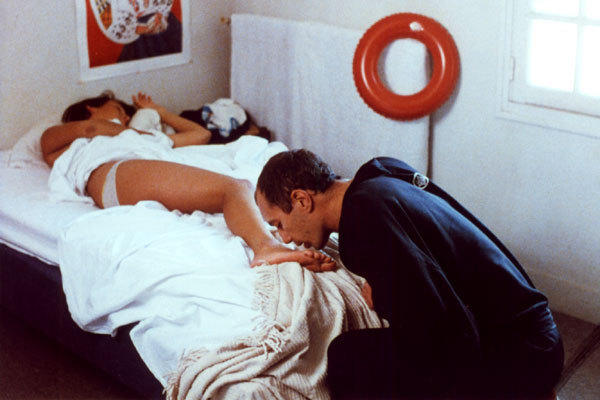
However, I recently reacquainted myself with Eric Rohmer's Pauline à la Plage (Pauline at the Beach) a film I had first watched shortly after its release in 1983. At the time I was a near contemporary of the teenage star Amanda Langlet and I remember taking a bit of a shine to her. Many years have passed and I've move on a generation but, on this piece of celuloid at least, Langlet has remained the same precocious young French nymph of around fifteen. So on seeing the film again and remembering how it had tweaked my own adolescent libido, it was hard not to be reminded of that now distant desire. As a result I have conceived the following scenario: suppose a pair of adolescents create a homemade erotic movie using a camcorder and then, decades later, the male of the pair periodically still digs it out and gets off over it. In every other respect he's a 'normal' heterosexual, but how would society judge him if they knew about his favourite home movie?

Rohmer uses Pauline's freshness as a foil for exposing the hypocrisy of the adults around her on her beach break. Nevertheless, the script adopts an essentially masculine perspective on relationships and although Pauline leaves the beach uncorrupted at the end, the possibility of fast-tracking her into adulthood has been thoroughly explored by several of the thirty-somethings, and frankly, the camera too. There's no question that the French are much keener on Autumn-Spring pair-ups than most modern European cultures and this suggestive sexualising of very young girls is a recurring motif in their cinema. (The tummy-rubbing scene in Leon etc.)

Perhaps one day a brave documentary programme-maker will attempt to convince us that paedophilia has animal equivalents. Perhaps not. It may well be the result of a distortion of our symbolic consciouness, a uniquely human melange of memory, ideas and desire. The other day tranvestite potter Grayson Perry was interviewed on the BBC World Service and argued that fetishes and other forms of "kinky sex" emerge in adulthood as responses to the childhood environment. This seems to confirm the tale once told to V by a foot fetishist she interrogated, who explained that his mother used to rub her slippers against him as a child.

We've come across an apparently nympholeptic individual in Guatemala called N; a personable, well-educated young man in his mid-20s with strong protestant religious beliefs and the vocation to one day serve as a pastor. He rejects the idea of sex before marriage and is himself, he openly professes, a virgin. However, when he was seven he was sexually-abused by a teacher and has since had trouble forming normal relationships with girls of his own age because, he says, every kiss or caress serves only to remind him of that first, forced awakening. Unsurprisingly, he's been repeatedly dumped for getting stuck at first base.

N also appears all too obviously excited in the prescence of pretty, pre-pubescent girls. Perhaps men like him (Michael Jackson, etc.) are damaged personalities seeking sanctuary in innocence. Yet as they move physically further from childhood their obsession with it can turn predatory, and in today's world an affinity for virgins becomes more and more distasteful as wrinkles deepen and flesh sags.

Like N, Lord Byron was abused as a child, by his nurse. During and shortly after his time as a student Byron's sexual preferences were predominantly of the pederastic sort, indulged either as a sexual tourist in the Balkans or on a more romantic level by worshipping the choir boys of Cambridge. This odd combination of hands-off platonic yearning combined with spurts of more aggressive seduction would seem to be fairly typical.

Perhaps a damaged woman will chance into N's life and 'save' him, like Walter is apparently saved by Mary-Kay in The Woodsman. The only woman capable of saving Byron was his half-sister Augusta, which of course made his adult sex-life even less conventional.

It's not unlikely that any adolescent lover that N might take in Guatemala would be less innocent than him, and crucially less awkward about reproductive issues. Yet after all, he may not be the sort to act on his apparent inclinations. How many of the individuals recently entrapped by the Police were just paedi-curious, people whose inclinations would have gone unexposed before the advent of digital footprinting?

It's clear that our whole sense of rational moral responsibility, founded as it is on the notion of free will, is particularly threatend by this one form of deviant sexual desire and by the wider access to pornographic browsing in our comprehensively wired world. Child-pornography in particular is regarded as a pernicious cancer threatening the young and vulnerable in our society which, like the international narcotics trade, has both a demand and a supply side in urgent need of shaming and suppression.

At the age of seven V narrowly avoided being molested by a middle-aged Catholic priest. If there's one place we should focus our outrage it is on the individuals who systematically groom and abuse pre-adolescents, especially where a culture of impunity exists. However, in the UK the media response is increasingly informed by a swollen, ill-defined paranoia which lacks understanding of the spectrum of possible behaviours, attitudes and situations, not all of which are utterly beyond the ken of progressive, liberal tolerance. If an adult teacher has a relationship with a fifteen year-old pupil they should probably be fired, but not necessarily tarred and feathered for life with the sex register.

Anyway, back to the movie. The deleted scenes on DVDs often expand our understanding of the director or scriptwriter's intentions by revealing to us significant dialogue and character interactions that were removed, perhaps only for reasons of balance or flow. The Woodsman has one cringey yet quite central scene where Walter sits alone on a park bench with a young girl he has followed. The unedited version of this scene is so much more retchworthy that it calls into question Fechter and Kassel's artistic vision and argument as a whole.

Redes

This Sunday the panel discussed the issue of qualia - how physical stimuli result in indentical electronic signals which upon arrival in the mind become the smells, colours, tastes etc. of everyday experience. One of the scientists provocatively asked his colleague what kind of an explanation for this he thought would satisfy humanity, and would it be of any practical use?

Thinkers in the western tradition have tended to separate out the problem of existence into two quite distinct grand mysteries: Objectivity and Subjectivity.

As the latter was always assumed to be part of our Divine nature for most of history Science has historically concentrated on the former:
  • Why does stuff exist and what are the rules that determine how it behaves?
  • How did the material universe get so big and what will happen to it in the future?
  • What is the significance of the size of our cosmos and the proportions of stuff and non-stuff within it?
  • Is matter an unlikely occupant of a tiny part of a void or are stuff and non-stuff both part of a bigger material system? etc.

Materialists have cut their teeth on these questions and have more recently turned their attentions to our brains and the subjective experience of consciousness: indeed a complex matter, but one where the subject to be studied at least seemed much closer to hand. Yet their efforts to expel the ghost from inside the machine have met with only partial success, falling short of a complete material explanation for consciousness. (Even if we are more likely to see the importance of incarnation to cognition than in the days of fully-detachable immortal souls.)

Objectivity remains a partially-resolved riddle, largely because the majority of the stuff in the cosmos is observable by us only in as much as it interacts with light. And once matter is studied at the micro-level as well as the macro-level it becomes less easy to achieve a clean separation from the mystery of Subjectivity.

So in both instances western scientists often find themselves scraping their skulls along a philosophical glass ceiling, which they are mostly reluctant to push through because in so doing their methodology is likely to become re-mudded with the kind of metaphysical speculations (and certainties) that their predecessors spent centuries defining themself in opposition to.

I suspect however that neither of the grand mysteries is wholly solveable in isolation and that they will have to be re-compounded along the lines of traditional Eastern thought before we can get any closer to satifying, big picture conclusions.

Monday, January 23, 2006

Following

The no-budget black and white film that Christopher Nolan made before Memento. The premise surely had a cleverer, more satisfying plot in it: a dole-bound scruff called Bill follows strangers to pass the time and to build material for a novel he one day plans to write. One of his subjects, Cobb, turns the tables on Bill, introducing himself as a public-school burglar who breaks and enters for the sheer pleasure of the violation, for the opportunity to experience the stuff of peoples lives. "Everyone has a box", he tells Bill, undoubtedly the film's most memorable line. Soon Bill is tagging along with Cobb and rummaging through other people's boxes.

Faced with the chronological fragmentation of 21 Grams, Ebert asked "Is this approach better than telling the same story from beginning to end?", and there's also something rather pointless about the flash-forwards with which Nolan interupts the flow of the first half of Following. That and a smothering noirish style combine to make this the sort of film that seems determined to give viewers a bit of a headache. Nolan was to do much better with the reverse chronology of Leonard Shelby's quest.

Clogged and Un-clogged

Plans to expand and improve Aurora international airport have clogged up now that current President and former city mayor Oscar Berger has told current city mayor and former President (and former political ally) Alvaro Arzú that he lacks the necessary requisitos (paperwork and permissions) to start work on the project. Or was it the other way round?

On the other hand Guatemala's three big mobile phone networks Comcel, PCS y Telefónica will finally permit the passage of SMS messages across their borders. This may mean that we will now be able to communicate with family members via text from the UK.

It was also reported today that 8 Guatemalan UN peacekeepers have been killed in a confrontation with Ugandan rebels in DR Congo.

Friday, January 20, 2006

Pixar Goodies

Quite possibly my worst investment decision so far in the 21st century was selling the bulk of my PIXAR stock − then around $30, now closer to $60 and going up fast on takeover speculation. (A sale to Disney for a rumoured $6.8bn would make Steve Jobs a director and major shareholder in the Magic Kingdom.)

Owning those shares was fun, not just because of the steady capital gains, but because every year they sent their shareholders a little gift of Pixar goodies, such as limited edition Toy Story posters!

We recently watched two Pixar animations on DVD for the first time. Monsters Inc. may not have quite the same level of voice talent as Finding Nemo, but it is on balance I think the more enjoyable of the pair; for adults at least. The old fashioned fishy quest (based on John Ford's The Searchers) has a more detailed and beautiful animated setting, but Monsters has more of the daring originality of conception that characterises Pixar's most outstanding animations: The Incredibles and the Toy Story series.

Toy Story 3 is due out in 2008: Buzz Lightyear gets sent back to Taiwan for repair!

The Observer 's Philip French sees Monsters Inc. as an allegory about modern America whose blue collar heroes help shady capitalists accumulate profit from the affliction of outsiders, people for whom they in turn have come to harbour an irrational fear!

Thursday, January 19, 2006

Mañana en la batalla piensa en mí

The situation at the start of this prize-winning Spanish novel is an attention-grabber. The narrator Victor Francés is a divorcee having dinner with a married woman of very recent acquaintance whose husband is away on business in London. They move to the bedroom where an unexpected angle to Victor's adventure transpires; she dies in his arms.

V and I started reading it together, but she was quickly put off by Marías' highly digressive narrative style (aka "mamadas"). The trouble is that Victor is the sort of narrator that is not only telling his story, he's also telling the story of his story. Yet in spite of the rambles, there was a strong enough thread of mystery and suspense to keep pulling me along, though this perhaps also set up some false expectations about where the story was actually going.

I came to enjoy the way the author's prose manifests Victor's habit of entertaining himself with his own thoughts and his sensitivity to life's might-dos and would-haves, revealed as a tendency to pan out of his immediate perceptions to speculate on ambient possibility - things that may or may not have happended or be happening: "Pensar en lo que no sucedió ha de ser parte de mí".

At first, some of these speculations do appear to be "mamadas" but the longer you read on the more you realise that these apparent imaginings often reflect experience of actual events that Victor will later relate to us. There are two desgracias, two sudden, ridiculous deaths, in this tale, one at each extremity, and Victor (only) knows about both of them from page one.

Marías has created a clever and very rich weave of themes and references. One of the most pivotal is that of haunting, a word that he (mysteriously) claims has no Spanish equivalent. (He does offer encantamiento, which is perhaps closer to our enchantment, but over in Guatemala they use the verb espantar to describe these rather territorial phantasmal behaviours.) Victor himself is a ghost ("un negro fantasma") in the real sense that he ghosts speeches for others. Yet even before he was left in a state of enchantment by the events of that night, he was leading the solitary, near invisible existence he himself associates with Volkswagen Golf drivers, and it's a state of isolation that appears to impact on his ethical choices.

Victor jokes that people like himself tend to turn on the TV when they walk into their apartments to check what has happened in the world during their absence, when in fact their absence from it is "perpetual". In this story it is the living that behave like shades with unfinished business.

There are parts which are less than fully satisfactory (such as the mid-section digression in which Victor can't make up his mind whether the streetwalker he has in his car is his ex-wife Celia) but I ended up with a strong sense of goodwill to the work as a whole. It is a fascinating exploration of deception: how we deceive and are deceived in turn, and one which characterises the world of the actual as fundamentally unstable and inexplicable on all temporal levels − past, present and future.

Incidentally, although Marías has a solid reputation as an anglophile, the London of this novel is a routine place of red Routemasters and black cabs, drizzle and downpours, business hotels with shared toilets and concierges that make a mess of Spanish names.